Wednesday, 3 July 2013

Vikings!


So History Channel's new series Vikings showed in April and started an obsession. Its second season is currently being filmed in Wicklow, near the beautiful Glendalough (and I'm still holding out hope that I'll get cast as an extra), and will be out next year.

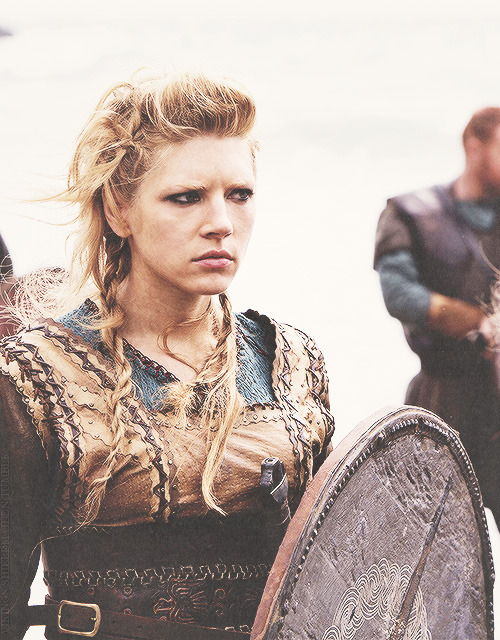
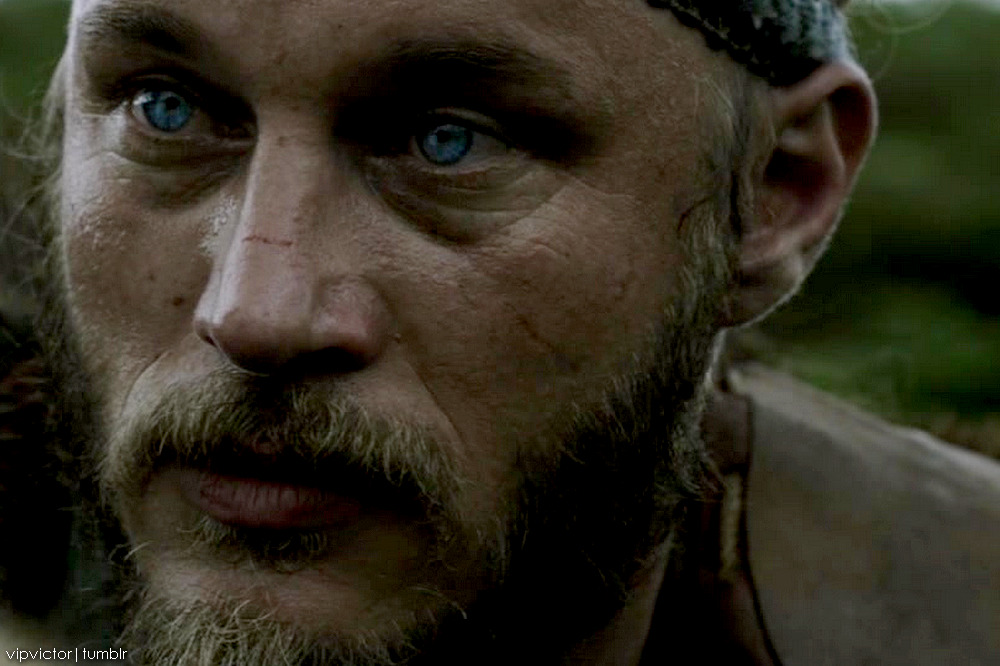
So, the fact that Vikings is attempting to be as close to history as possible is pretty cool, and there is a very authentic feel from it, and there is even a good attempt at the characters speaking a bit of Old Norse and Old English. Cooler still, is Lagertha Lothbrok, played by Canadian actress Kathryn Winnick. And Travis Fimmel's (who plays Ragnar) eyes deserve a mention too.

But anyway, back to Lagertha, who is my main interest, because she is one of those rare female characters who show that women are just as good as men when it comes to wits and battle (not me, personally, so don't take this as a challenge). And she's absolutely beautiful without being overly sexualised or turned into a mere ornament for viewers. And her hair, look at her hair! Basically, I want to be her. 

Anyway....I was interested to find that she was loosely based on a real life Danish shieldmaiden, and was also the real life wife of Ragnar Lodbrok (Lothbrok in the series). Lagertha's story was recorded in Saxo Grammaticus' History of the Danes, written in the 12th Century (and assumed to be mostly fictional by scholars such as Judith Jesch). Saxo describes her as so: 

"Ladgerda, a skilled Amazon, who, though a maiden, had the courage of a man, and fought in front among the bravest with her hair loose over her shoulders. All-marveled at her matchless deeds, for her locks flying down her back betrayed that she was a woman."

Cool, huh? Lagertha's story begins when Frø, king of Sweden, invaded Norway and killed Norwegian king Siward. He subsequently ordered all the women belonging to Siward's family to be put in a brothel for public humiliation. And so enters Ragnar, who, hearing of this madness, comes to avenge his dead grandfather, where he first spots Lagertha across the dancefloor...I mean, battlefield..., who along with many other women under king Siward's reign, had dressed as men to fight alongside Ragnar. Ragnar's victory over Frø is said to be much indebted to Lagertha, who acted as chief among these rebelling women. 
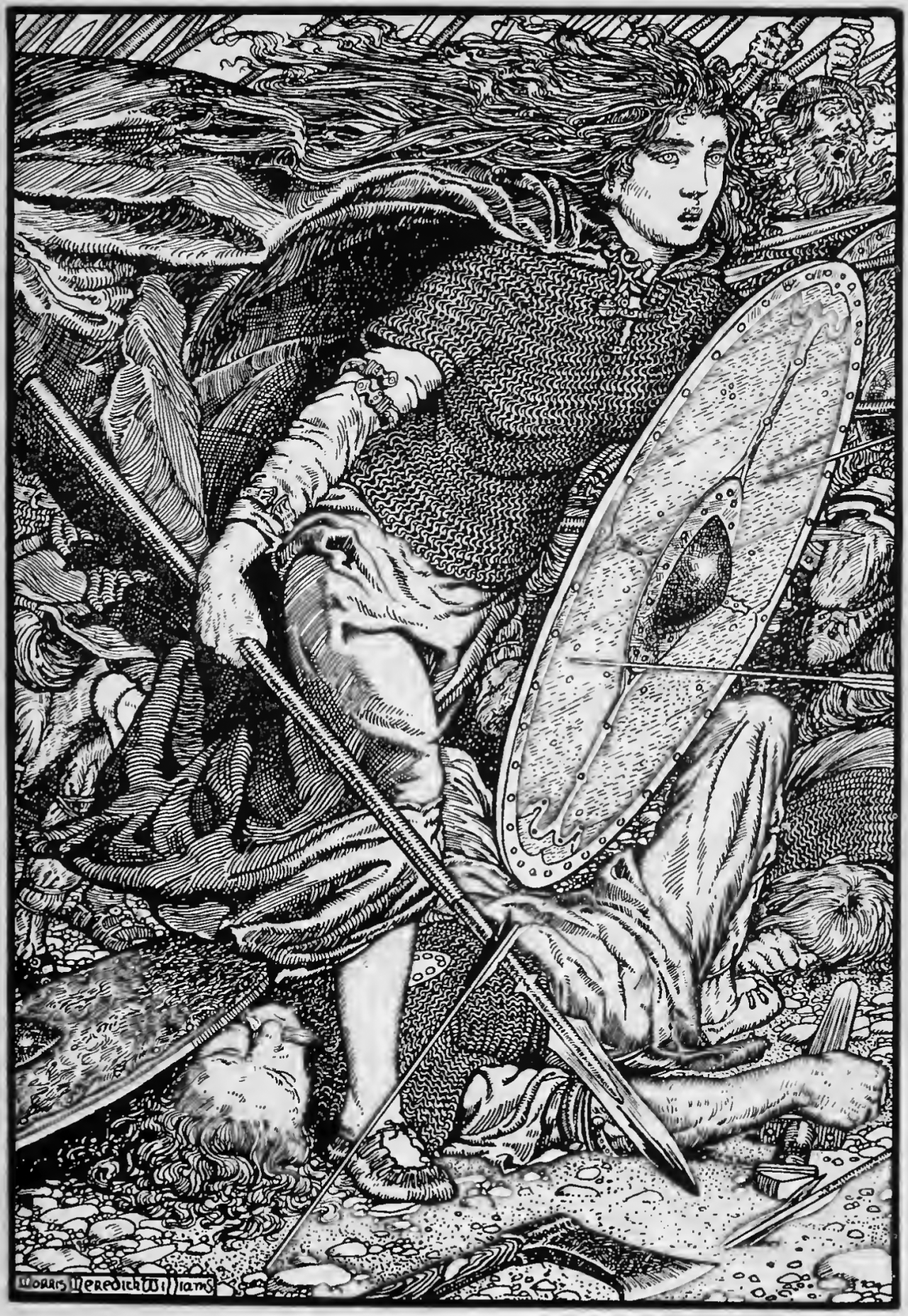
Morris Meredith William's Lagertha, from 1913


And who can blame Ragnar for falling for her? During his courtship of Lagertha, Ragnar sent messengers to her and though "she spurned his mission in her heart, she feigned compliance". He eventually killed both a bear and a great hound which were guarding Lagertha's home - and so, he won her hand in marriage, and children were had. But...Ragnar then divorces Lagertha (as he's still pissed about the bear and the hound, apparently), to marry Þóra borgarhjörtr (or Thora Town-Hart), daughter of the king of Sweden. Upon his return to Norway, he was faced with civil war, and the ever-admirable Lagertha, who still loves him (sob) comes to his aid with 120 ships and saves the day. After this victory, Lagertha kills her second husband, "the presumptious and self-indulgent woman would rather rule without her husband than share the glory with him". 

According to the Tale of Ragnar Lodbrok's sons (Ragnarssona þáttr), Thora Town-Hart later dies of an illness, and Ragnar then marries Aslaug (aka AslögKrakaKraba or Randalin), daughter of Brynhildr (you may know her from Xena), who we were just introduced to in the final episode of season one (and who has nothin' on Lagertha!). 

I do plan on finding out more about Lagertha, but there doesn't appear to be many sources, and I have no access to the library :(


Tuesday, 2 July 2013

My opinions regarding Grendel's Mother

Seeing that my blog title is as it is, maybe the subject of Grendel's Mother is a good place to start. This was the subject of my MA thesis, so I've done my research and watched all the crappy films that come with it (and let's not get started on the absolute rubbish (well, this 'Josh' fellow doesn't seem to think so, but that's what friends are for, eh?) that was camouflaged as literature).

I am an unapologetic fan of Grendel's Mother - I see her as a powerful and role-transcending woman (note how I say "woman", and not "sea-hag" or "monstrous ogress"). I feel that she has been given an extremely hard doing over the years, and has been incorrectly portrayed in many of the hundreds of translations of Beowulf, along with her appearances in literature, comics, film and TV (with few exceptions!).

From the outset, it would seem that the figure of Grendel's Mother just hasn't really attracted much attention - her scenes in the poem are often seen as fillers, as irrelevant , or unconnected with the rest of the poem, or seen as merely a transition between Beowulf's fights with Grendel and the dragon. Some critics, like J.R.R Tolkien (Beowulf: The Monsters and the Critics), for instance, seem to have read a copy of the poem that's missing quite a number of pages, as they appear to have forgotten about Grendel's Mother. In fact, Tolkien appears to pretty much ignore all the female characters in the poem, transforming Beowulf into some sort of exclusively-male poem (obviously many still view it as so).
Why does he ignore Grendel's Mother? Is it because she's female? It's hardly because she isn't a capable foe - in fact, she puts up quite a fight, and puts her historically much more famous son to shame as far as I'm concerned. As it turns out, I can't answer why Tolkien ignores Grendel's Mother, or why so many other critics brush her out of the way and concentrate on the apparently more important men in the poem, but I can throw out some guesses in due course.

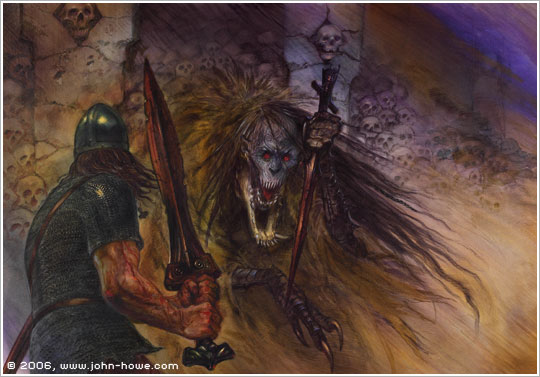
To liven things up, here are some re-imaginings of Grendel's Mother, in art and media, to get an idea of how the majority seem to view her:

Angelina Jolie as Grendel's Mother - complete with gold paint and stiletto-feet

Did you know: Grendel's Mother played the troll from the Mines of Moria in The Fellowship of the Ring...well you do now

Two mouths. Cool

da fug is this?

From Gareth Hinds' comic version. I honestly loved the artwork in this, but didn't love Grendel's Mother's sagging chest :(


So...uh...yeah. Although, out of these, her portrayal in the 2007 Beowulf by Zemickis, where she is played by Angelina Jolie is probably the most accurate, in a way (fun fact: only the face is Jolie's. Grendel's Mother's hot body is actually played by Rachel Berstein, swimwear model, cause y'know, Angelina's body just isn't what anybody wants to see - but this is an issue for another day). Why? Because, at least here she looks somewhat human (minus the gold and the tail), disregarding when she turns into that...thing...seen in the second last picture, which kind of looks like it started off life when it burst through John Hurt's stomach.

Zemickis is obviously an Alien fan

I guess this is where I state my views on Grendel's Mother (provided you haven't already guessed) - I do not believe that she was intended to be a monster (or "swamp-thing" or "sea-hag" for that matter!). I believe she is, plain and simple, a woman, because, in my humble opinion, the original Old English just does not translate that way. "So, what", you say, "she's just, like, some really strong woman who happens to live in a cave and almost kills Beowulf? Haw haw, yeah right". YES. PRETTY MUCH. And I plan to state my case in a coming blog post, and then probably go on to nitpick every media adaptation of her. 

About this blogging thing

I have never blogged before, because I am firmly set in the ways of the ancients, and because, come on, nobody is going to read this anyway.

This is a blog to try keep track of ideas that will eventually contribute towards my planned PhD - so basically, where I will be writing about things dealing with women in Old English (and perhaps Old Norse and Ancient Greek), and if possible, their representations in modern media. There will also most likely be a load of vegetarian/vegan recipes thrown in too....sure, why not?!


Let's see how long this lasts.