Showing posts with label Lagertha. Show all posts

Monday, 7 April 2014

Female power in Vikings Season 2


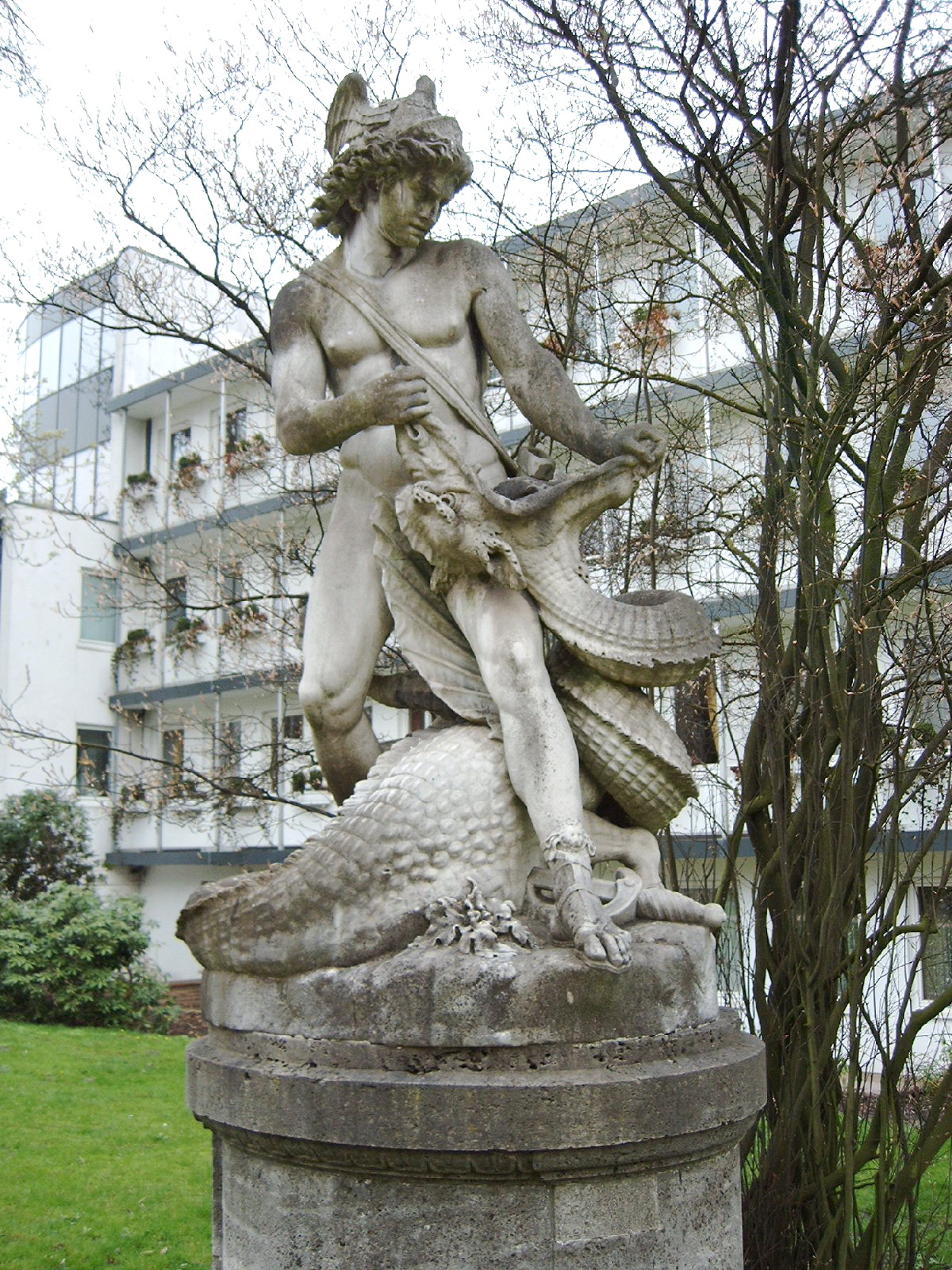
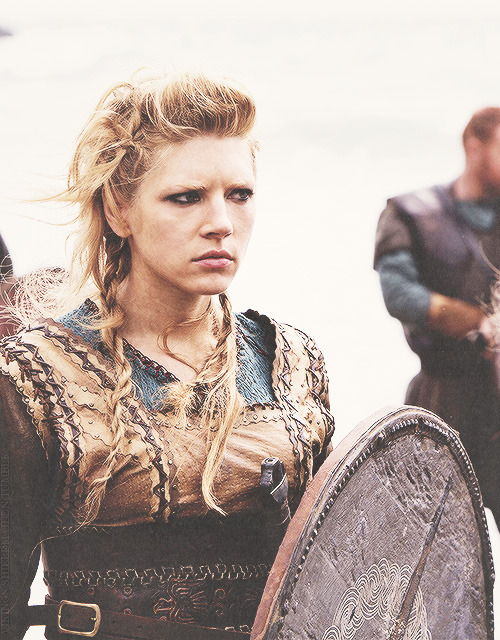
#vikings-shieldmaiden:  #Lagertha's career as a warrior began when Frø, king of Sweden, invaded #Norway and killed the Norwegian king Siward. F...


It is now half way through the second season of Vikings (for those who live in Canada or the US and for those who have few qualms regarding downloading). Obviously there will be spoilers, especially for those of you who are resigned to watching it in RTE 2! Suckers.

As she was in the first season, Lagertha is still my favourite character. This season also has a few more female characters of a bit more importance, most notably Aslaug, and it appears that the girl who Bjorn has his eye on may have a bigger role soon (But I can't help but be reminded of that absolute disaster The Legend of Hercules whenever I see her. Horrid flashbacks!). There are a few noteworthy moments involving the women of Vikings so far in the season:

Firstly, is Lagertha's decision to leave Ragnar, as Aslaug arrives on their doorstep with a bellyful of children. She has the dignity to walk away from Ragnar and start a new life with no drama involved, which is a nice change to the usual catfighting women screaming at one another over a man (even if he is as wonderful as Ragnar). In the actual mythology, Ragnar divorces Lagertha and there is a different woman, Þóra borgarhjörtr, in between her and Aslaug, but to be honest, that would make him look a bit too bad!


Four years later we see Lagertha with a new husband, Earl Sigvard, who is frankly, a bit of a dick. She stands up to his advances and his attempt to rape her and shows him where to shove it. As always, she does as she pleases, and returns to help Ragnar to reclaim Kattegat from Jarl Borg (as also happens in the myth - she comes to his aid with 120 ships, and saves his ass). 

In the last episode so far (episode 6), Lagertha returns to her second husband, despite still being in love with Ragnar (who is unwilling to choose just one wife). After getting his men to brutally beat her during the night, he attempts to publicly shame her by trying to show everyone at the table what lovely breasts she has. Unfortunately for him, she grabs a knife and turns around to stick it in his eye. Hell yeah! He is then beheaded by one of his own men (who I don't trust either...). In the myth, she is also responsible for her second husband's death; "the presumptious and self-indulgent woman would rather rule without her husband than share the glory with him" (Saxo Grammaticus). As you can see, the television series views her somewhat more sympathetically! Of course, this is as far as the mythology surrounding Lagertha appears to go, from what I can find, so its up to the series now! 


Another important scene takes place in Wessex in England (where attempts at speaking Old English are made...I understood cyning . . . so proud!) with Athelstan, the hot monk taken as a slave (and later made a free-man by Ragnar, and later captured by the people of Wessex), in episode 5. When a woman who is beaten because her husband thinks she has been unfaithful to him comes to King Ecgbert for counsel, the King asks him what the craic is with the pagans in such situations - Athelstan says that "if she was a free-woman, they would believe her word, and make judgement on her behalf". Ecgbert replies thinking that "surely her husband has every right over her, surely she belongs to him, to do with as he sees fit." Well, not according to the pagans! The open-minded Ecgbert (Athelstan has heard he is like Ragnar...and unlike the misogynistic Anglo-Saxons it would seem!) follows this pagan law and goes in the woman's favour. 

In general it would seem that the vast majority of main characters are somewhat "feminist" characters...to an extent. The Norse peoples, or as Ecgbert would say, the "pagans" have a more equal society than the Anglo-Saxons, allowing women to partake in raids and battle, and seemingly allowing them equal judgement in the eyes of the law. Of course, this didn't stop the vikings raping all around when they were on their raids, but this may also be seen as a "weapon of war" against the men, as much as it is seen as an act of violence against the women.


With regards to Aslaug, I am happy that this season is making a bit more of an attempt to flesh out her character, althoug it is not enough. Aslaug's character in mythology is pretty interesting - she is the daughter of Sigurd (who killed the dragon Fafnir) and Brynhildr, the shield-maiden, who I wrote a post on a few months back. As a child she was taken care of by a foster father, Heimer, and hid in a giant harp. Her next foster parents Ake and Grima, who killed Heimer as they thought there were valuables in the harp, found her hiding inside and raised her as their own, covering her in tar to hide her beauty (and therefore her noble birth). It is at this point that she meets Ragnar Lodbrok.
    Interestingly, Ragnar proposes to her, but she refuses him until he accomplished his mission in Norway. It is also, only after giving him three sons, that she reveals her true noble blood to him (after she hears that he has planned to marry Ingeborg), and promises to give birth to a child that bore a snake's eye, Sigurd Snake-In-The-Eye!

In the series, although she is not so much the "Other Woman" as she was at the end of season one, she is still portrayed as a bit of a princess, complaining about dirt and playing the jealous wife when Ragnar speaks to other girls. Hopefully we will get a more rounded character as we go along.


Also, GAME OF THRONES IS BACK, BYE

Monday, 22 July 2013

Brynhildr - a Norse rom-com (minus the comedy... and much of the romance)

Brynhildr, depicted by Robert Engels in 1919


We've already talked about one (official) shieldmaiden, Lagertha, so I think it's time we talk about some more kickass Norse wimmins.

Interestingly enough (maybe? Is it? I dunno), there is a connection between Lagertha and the more famous shieldmaiden we are going to talk about today - Brynhildr. You may recall that Ragnar Lodbrok took Brynhildr's daughter, Aslaug, as his third wife, after divorcing Lagertha (I'm still a bit butt hurt over this). Brynhildr also has a connection to another figure, Gudrun/Kriemhild, who I want to discuss more in the future (she does pop up here quite a bit). Shit, she even has a connection to Grendel's Mother in Xena: Warrior Princess (Grinhilda)! Basically, Brynhildr gets around!

DISCLAIMER: There will be a whole lot of name repetitions - you will never want to hear the name Brynhildr again! Brynhildr Brynhildr Brynhildr!

The character of Brynhildr may be famous from Wagner's Ring Cycle, Der Ring des Nibelungen, but she started out as a figure in Norse mythology (and possibly even before this as Brunhilda of Austrasia, a real life Visigothic princess). Although, to be completely honest, most people will have heard the name Brynhildr/Brunhilde/blablabla etc, from things like Xena, various video games, World of Warcraft, Django Unchained, and by the looks of it, some softcore manga...what the...

Eh, anyway. Brynhildr appears in the Völsunga saga, a 13th century Icelandic text and some Eddic poems. In the Völsunga saga, she is condemned by Odin to live life as a mortal woman and imprisoned in a ring of fire until a man rescues and marries her. The lucky man to come and rescue Brynhildr was Sigurðr Sigmundson, hero of the Volsung saga, and needless to say, the two of them fall madly in love, ending with Sigurðr's offer of the ring Andvaranaut (which is likely to be an influence for the one ring in LOTR) as a proposal. Sigurðr, who needs to run off on important business, promises to return to make Brynhildr his bride. In the meantime, Gudrun comes over for a cup of tea and to ask for some help in interpreting a dream, which coincidentally enough foretells Sigurðr's betrayal of Brynhildr and his marriage to Gudrun - forget Freud, these guys really knew their dreams!


The man himself . Killing Fafnir.


So, at this stage, Sigurðr is off with Gjuki, the King of Burgundy. Gjuki's wife, Grimhild, who happens to be Gudrun's mother dearest AND a sorceress (how unlucky), prepares a magic potion so that Sigurðr will forget about Brynhildr. And alas, the potion does its job, and he marries Gudrun instead. In some strange series of events, Gjuki's wife then decides to marry her son Gunnar to Brynhildr (what a terrible mother-in-law she would have been). However, Gunnar finds that he can't get through this ring of flames, and so, Sigurðr offers to exchange shapes with him, and enters to claim her hand. So Sigurðr, disguised as Gunnar, stays with Brynhildr for three nights, putting a sword in between them so she will retain her virginity (imagine if they couldn't find a sword - close one!) and then takes the One Ring to Rule Them All from her finger to later give to Gudrun (oh no he didn't!). Sigurðr and Gunnar return to their true forms and Gunnar is married to Brynhildr.

And this is where shit gets real. Gudrun and Brynhildr start arguing about who has the better husband, where Brynhildr starts bragging about how brave her Gunnar was to ride through the flames to get her, causing Gudrun to drop the bombshell that it was actually Sigurðr. As you can imagine, Brynhildr goes ape, and Sigurðr starts to remember the truth, but fails to console her. So, Brunhildr tries to urge Gunnar to kill him, telling him that Sigurðr slept with her - Gunnar, being too scared to kill Sigurðr himself, gives his little brother a potion that enrages him, causing him to kill Sigurðr. Brynhildr then kills Sigurðr's son, and during Sigurðr's funeral, throws herself on his funeral pyre, thus entering into Hel with him - a somewhat romantic ending...in a rather messed up way.


Brünnhilde throws herself on the flames. By Arthur Rackham for Wagner's Ring Cycle


Have you died of boredom yet? There are differences in other versions of the story found in a few Eddic poems (eg Aslaug is Brynhildr's and Sigurðr's daughter), but honestly, ain't nobody got time fo' that.


The story of Brynhildr can then be found in the Nibelungenlied, a Middle High German epic poem about Siegfried (Sigurðr). There are quite a few differences regarding her tale in this version - Brunhild is the queen of Iceland, and with Siegfried's help (who is hidden under an invisibility claok that he got off Albus Dumbledore), Gunther (Gunnar) wins Brunhild in a series of rather warlike games. There doesn't appear to be any suggestion that Siegfried had proposed (or even known) Brunhild before this.

Brunhild, who is suspicious of Siegfried (as Gunther introduced him as a vassal, although he was actually royalty), denies Gunther her virginity until he tells her the truth. Gunther tries to take her by force, but Brunhild merely pushes away his advances as if he were a tiny kitten and ties him to the ceiling. 


Gunther's Wedding Night by Johann Heinrich Füssli


The next day, Gunther, being a little bit put out at not getting the ride, tells Siegfried what happened, so Siegfried enters their bed chamber that night under cover of the invisibility cloak, and holds Brunhild down until she submits to Gunther's will - a bit rapey if you ask me. In this version of the story, this is when Siegfried takes "a ring" from her finger (along with a girdle), which is later shown to her  y Kriemhild (Gudrun) during their "my husband is better than yours" argument - thus giving away the game. Hagen, Brunhild's vassal, promising to take revenge on the wrongdoer then kills Siegfried. So, as you can see, this version has a lot less romance, and a lot less sympathy for Siegfried/Sigurðr. 


Some other time I will discuss Wagner's Der Ring des Nibelungen, because this post is about forty-two times longer than I'd intended it to be. It's time for me to go watch Wrath of the Titans and see if it's as class....I mean....crap.... as Clash of the Titans (whose tagline was "Titans will Clash" - I never tire of telling people this).


Saturday, 6 July 2013

The real life Éowyn... kind of


As most people already know, J.R.R Tolkien was somewhat of an Anglo-Saxon, Middle Ages, and Norse Mythology enthusiast, having been involved in such works as Sir Gawain and the Green Knight (translator), Beowulf: The Monsters and the Critics (where he forgets about Grendel's Mother), and The Legend of Sigurd and Gudrún, as well as being professor of Anglo-Saxon studies in Oxford. Tolkien was also the founder of the Kolbitar club (members included C.S. Lewis), where a group would sit around and read Icelandic and Norse sagas over some pints of mead...well...maybe not the mead bit, but the rest is true.


WHERE CAN I GET THIS?!


So anyway, the influence of all these cultures and their literatures is pretty obvious to spot in The Hobbit and The Lord of the Rings trilogy. 

  • There were many 'rings of power' in Norse mythology - perhaps the one ring is based on "Andvaranaut", a magical ring forged by the dwarf Andvari. Norse god of mischief, Loki, tricked Andvari into giving him this ring, and so the dwarf, in revenge, curses the ring so that it brings destruction to whoever wore it. 
  • Many of the dwarves' names in The Hobbit are taken from Norse mythology, and can be seen in the Prose Edda, including Dvalin, Bifur, Bafur, Bombor, Dori, Nori, Ori, Oin, Fili, Kili, Gloin and Thorin!
  • There's clearly a link between Middle-Earth and Midgard, the Norse realm of humankind. 
  • There's a possibility that the inspiration for Smaug came from the dragon that appears in Beowulf 
  • Perhaps Arwen is an adaptation of Freyja, her necklace which she gives to Aragorn a version of the Brisings necklace, which Freyja wore to enhance her beauty. It is also notable that Freyja had a human lover, Óttar. 
  • And there are many more similarities...

And now that I've gone off the point somewhat, it's time to talk about what the post is actually about...Éowyn! But it's mostly about....Æthelflæd!


So, who the hell is Æthelflæd? Well, she just so happens to be a pretty kick-ass Anglo-Saxon woman. Born during the height of the Viking invasions, she was the daughter of Alfred the Great, King of the Anglo-Saxon kingdom of Wessex (the other three kingdoms being Northumbria, East Anglia and Mercia). During the 9th century, England was experiencing more frequent attacks from the Vikings, which culminated in "The Great Heathen Army" in 865. In 871,  Æthelflæd's uncle, King Æthelred died from wounds received in battle, and Alfred the Great came to power, winning a victory over the Danes. This led to a peace agreement, in  which the Vikings were given the eastern part of Mercia, to be incorporated into the Viking East Anglia. 

THIS IS ENGLAND

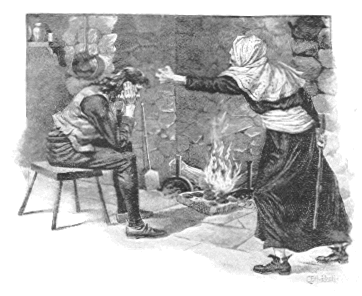
Unluckily for Alfred, the Vikings didn't keep their word (after all, they were plundering, raiding Vikings), and after a few years laid an attack on Wessex, and Alfred and the rest of the royal family were forced to flee to the Somerset marshes, while the lousy King of Mercia fled to Europe (what a dryballs). In Somerset, Alfred apparently took shelter in the home of a peasant woman who asked him to look after some cakes on the fire. Being too preoccupied with the kingdom and all that nonsense, he accidentally let the cakes burn. 

You let the cakes burn, you dope!

Anyway, while in Somerset, Alfred got together some followers and turned them into warriors (I'll Make a Man out of You from Mulan comes to mind), and defeating the Danes at the Battle of Edington. He eventually returned London to the Mercians, and Æthelred, ruler of the remaining Mercia recognised Alfred as his Overlord. And finally, Æthelflæd comes into the story, as she was offered by Alfred to Æthelred, to cement their alliance, much like a peace-weaver would have done in Ancient Scandinavia. Alfred defeated yet another wave of Vikings, and all across England, was recognised as king. After Alfred's death, his son Edward become king of Wessex. Meanwhile in Mercia, Æthelred falls ill, and Æthelflæd effectively became ruler. 

With her brother Edward, Æthelflæd raided Danish East Anglia and repulsed the last major Danish army sent to ravage England. Æthelflæd then won the support of the Danes, and formed an alliance with the Scots and the Welsh to stand against the Norwegian invaders. When her husband died in 911, she became the sole ruler of Mercia and builds fortifications throughout Mercia. She then went on to invade Wales in order to avenge the murder of a Mercian abbot Ecgberht, and succeeded in capturing the king's wife. Æthelflæd then led her armies against the Viking invaders, capturing their stronghold at Derby. In 918, the people of the region of York promised to pledge their loyalty to Æthelflæd in order to gain her support against Norse raiders. Unfortunately, before this could be realised, she died in the same year, leaving behind her daughter Ælfwynn as ruler of Mercia (although she is removed from power by Edward). 

Æthelflæd's and Éowyn's lives are by no means identical, I am not saying they are, but Æthelflæd was most likely an influence, especially noting that the Rohirrim in general seem to have been influenced by the Anglo-Saxons - their language is based on Old English, and the Hall "Meduseld" brings to mind images of the mead-hall, especially that of King Hrothgar's in Beowulf. In fact, comparisons can also be made between Éowyn and Wealhtheow, as both serve as cup-bearers in the Great Hall. Comparisons can also be made between the hymn sang by Eorl in Lord of the Rings and 'The Wayfarer', an Anglo-Saxon poem. And many more comparisons too. It makes sense that Éowyn should be based on Anglo-Saxon sources also (although there have also been comparisons made between her and the Valkyries of Norse Mythology), and is perhaps some sort of hybrid between the traditional cup-bearer Wealhtheow, and the more active and powerful Æthelflæd. 

Too often have I heard of duty,’she cried. ‘But am I not of the House of Eorl, a shieldmaiden and not a dry-nurse? I have waited on faltering feet long enough. Since they falter no longer, it seems, may I not now spend my life as I will? 
'What do you fear, lady?” he asked. 

'A cage,” she said. “To stay behind bars, until use and old age accept them, and all chance of doing great deeds is gone beyond recall or desire.'”

Éowyn's deeds also remind me of my reading of Lagertha. Also a shieldmaiden, she disguises herself as a man (much like the women in Lagertha's story do when their relam is attacked by the King of Sweden) and proves herself the be as capable as any man on the battlefield. Hell, she even kills the witch king! 


Wednesday, 3 July 2013

Vikings!


So History Channel's new series Vikings showed in April and started an obsession. Its second season is currently being filmed in Wicklow, near the beautiful Glendalough (and I'm still holding out hope that I'll get cast as an extra), and will be out next year.

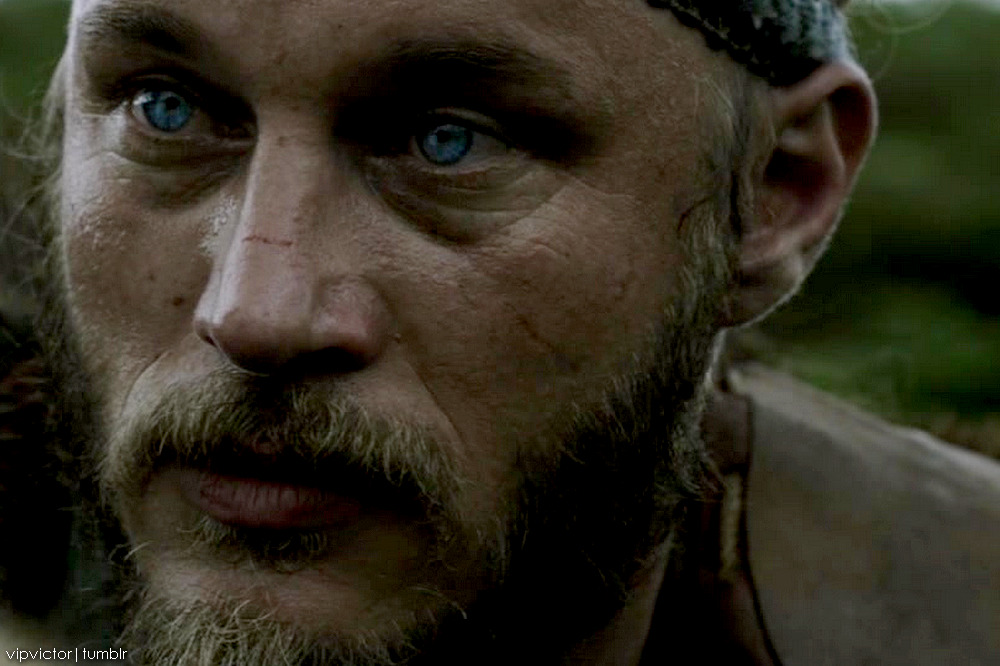
So, the fact that Vikings is attempting to be as close to history as possible is pretty cool, and there is a very authentic feel from it, and there is even a good attempt at the characters speaking a bit of Old Norse and Old English. Cooler still, is Lagertha Lothbrok, played by Canadian actress Kathryn Winnick. And Travis Fimmel's (who plays Ragnar) eyes deserve a mention too.


But anyway, back to Lagertha, who is my main interest, because she is one of those rare female characters who show that women are just as good as men when it comes to wits and battle (not me, personally, so don't take this as a challenge). And she's absolutely beautiful without being overly sexualised or turned into a mere ornament for viewers. And her hair, look at her hair! Basically, I want to be her. 

Anyway....I was interested to find that she was loosely based on a real life Danish shieldmaiden, and was also the real life wife of Ragnar Lodbrok (Lothbrok in the series). Lagertha's story was recorded in Saxo Grammaticus' History of the Danes, written in the 12th Century (and assumed to be mostly fictional by scholars such as Judith Jesch). Saxo describes her as so: 

"Ladgerda, a skilled Amazon, who, though a maiden, had the courage of a man, and fought in front among the bravest with her hair loose over her shoulders. All-marveled at her matchless deeds, for her locks flying down her back betrayed that she was a woman."

Cool, huh? Lagertha's story begins when Frø, king of Sweden, invaded Norway and killed Norwegian king Siward. He subsequently ordered all the women belonging to Siward's family to be put in a brothel for public humiliation. And so enters Ragnar, who, hearing of this madness, comes to avenge his dead grandfather, where he first spots Lagertha across the dancefloor...I mean, battlefield..., who along with many other women under king Siward's reign, had dressed as men to fight alongside Ragnar. Ragnar's victory over Frø is said to be much indebted to Lagertha, who acted as chief among these rebelling women. 

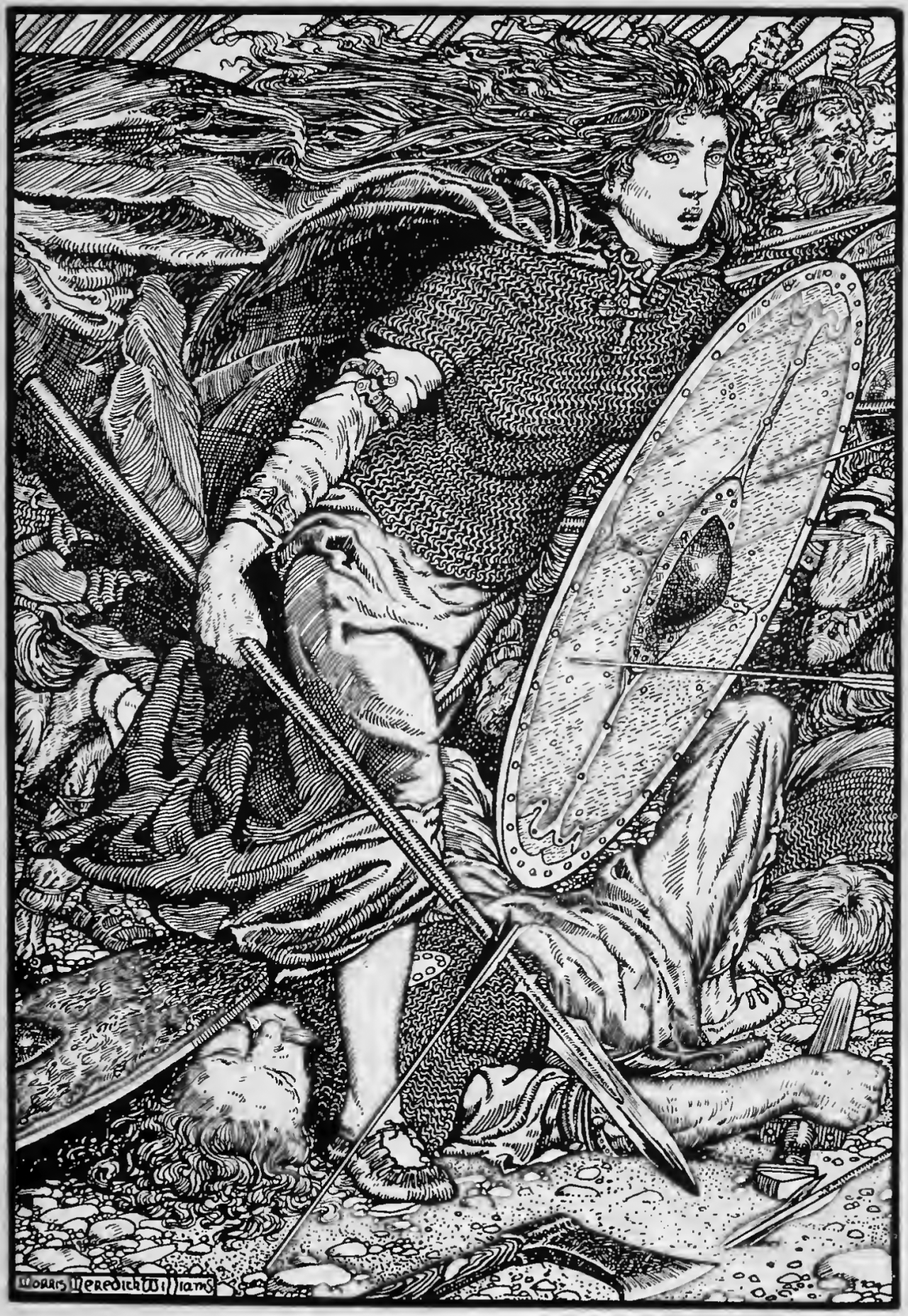
Morris Meredith William's Lagertha, from 1913


And who can blame Ragnar for falling for her? During his courtship of Lagertha, Ragnar sent messengers to her and though "she spurned his mission in her heart, she feigned compliance". He eventually killed both a bear and a great hound which were guarding Lagertha's home - and so, he won her hand in marriage, and children were had. But...Ragnar then divorces Lagertha (as he's still pissed about the bear and the hound, apparently), to marry Þóra borgarhjörtr (or Thora Town-Hart), daughter of the king of Sweden. Upon his return to Norway, he was faced with civil war, and the ever-admirable Lagertha, who still loves him (sob) comes to his aid with 120 ships and saves the day. After this victory, Lagertha kills her second husband, "the presumptious and self-indulgent woman would rather rule without her husband than share the glory with him". 

According to the Tale of Ragnar Lodbrok's sons (Ragnarssona þáttr), Thora Town-Hart later dies of an illness, and Ragnar then marries Aslaug (aka AslögKrakaKraba or Randalin), daughter of Brynhildr (you may know her from Xena), who we were just introduced to in the final episode of season one (and who has nothin' on Lagertha!). 

I do plan on finding out more about Lagertha, but there doesn't appear to be many sources, and I have no access to the library :(