Showing posts with label Old Norse. Show all posts

Friday, 25 March 2016

næfne he wæs mara þonne ænig man oðer

It has been too long (pretty sure I said that last time) - for the past few months a sense of guilt over not updating this thing has crept into my dreams and shadowed my life, resulting in an existence of anguish and marginality ... yeah, not really. But I was reminded that I do actually have this blog, so thought I really should get back to it, seen as it apparently helped me in forming ideas?

So, at the moment I am currently working on a paper that I will be delivering next month at Borderlines XX in Trinity College Dublin, dealing with Grendel (NOT GRENDEL'S MOTHER WHAAAT) and his gigantism. For this I am just going to talk about the word eoten, and will continue on with this topic in further blog posts (in like a year based on the rate I'm going).


Grendel by J.R Skelton


When people think about Grendel (as they often do), the images that come to mind are much like J.R Skelton's ape-like hula skirt Grendel shown above, or the Grendel of Zemeckis's 2007 work, which tends to remind me of some sort of whingy snot-covered ent from LOTR - ugh. Basically, Grendel is fugly, and generally sort of huge, and one of the terms which supposedly proves this, is eoten. 

Eoten itself is generally translated as "giant" or "troll", or something along those lines, when it comes to its reference to Grendel and also often in its appearance in the list of creatures who sprang from Cain - just sprang out of him. When reading a translation of the poem, which to be honest most people do, this is grand. But then you realise the Jutes who appear in the Hildeburh Fragment...well, they might not even be Jutes! They may be Frisians. Shit, they may even be god-damn GIANTS. The appearance of the word eoten in the Hildeburh Fragment has thus caused much debate - firstly cause, well, what the hell are the Jutes doing here, we thought this was a feud between the Danes and the Frisians? What. Secondly...well, if eoten means Jutes...how can it also mean giants? Did the Jutes spring from Cain? IS GRENDEL A JUTE (it seems like today is a regular all-caps day)?


Zemeckis's giant snot-monster


A few theories seem to stand out for this eoten problem:
  • R.W. Chambers is of the opinion that the scribe was just some dipshit who wrote down the wrong word - he meant to say eotnum, not eoten, the fool. So basically, in Chambers' mind, the Jutes are at the Battle of Finnsburg
  • R. E. Kaske says that the Jutes are not ever mentioned in this piece and the word eoten is actually just an insult for the Frisians - not one that means Jutes, but one that means "giant". Kaske refers to jotnaheiti, "giant-terms" being used in Old Norse as insults for ordinary men.
  • David Williams says that the word eoten is used as a reference to Cain and his murder of Abel, and that he is likening them to Finn and Hnæf - presumably he sees the eotenas as figures associated with Cain - possibly the giants of Genesis, the Nephilim. 
  • Signe M. Carlson, then, argues that eoten means neither Jute nor giant, but means "blood-thirsty one", a theory which I quite like!
Carlson argues that eoten is related to etan, "to eat" (which it also is in Proto-Indo-European), and so, rather than referring to height, is actually just a term referring to blood-lust. Grendel is blood thirsty, and so, you could say, are the Frisians; they kill the shit out of the Danes.


Arthur Rackham's Giants and Freyja


It may also be useful to look to Norse mythology and the jotunn, or jotnar, the giant-race prevalent in many myths. In general these lads are pretty hostile towards the gods, but it must be noted that this isn't always the case - some of them are related to the Gods, some are described as beautiful (Skaði), and importantly, some of them aren't tall. It may even be argued that the name jotunn is also related to Proto-Indo-European *etan, and refers rather to gluttony or blood-thirstiness as opposed to gigantism.


Lastly, we also the eoten appear in relation to the sword Beowulf uses to kill Grendel's mammy - okay, sure you may say Beowulf is a strong lad, he can pick up any sword he wants. But...Wiglaf and Eofor also have eotenisc swords, and they are never said to have superhuman strength as Beowulf is...unless there are shitloads of lads with superhuman strength running around Denmark, but this I doubt. If the swords are pretty easy for someone (granted, a warrior) to pick up, surely the eotenas must not have been of huge stature and strength either? Yes? No? 


Anyhow, those are my thoughts on the word eoten. I always find I start off strong with these posts and then gradually everything just goes so downhill the more fed up I get. Hopefully sometime in the next year I will write about þyrs and Grendel's connection  with the Nephilim and whether these also make him unnaturally large. Gōd-sped.

Sunday, 8 June 2014

From Eald to New - University College Cork, June 2014

It is with a hangover and a huge lack of sleep that I want to express what a wonderful time I had at my first conference.

I was somehow roped in to speaking at the From Eald to New conference ("and he never forgave, and he never forgot") which took place at the weekend and spent months before having "Oh christ, no" thoughts whenever it came to mind. However, as of yesterday morning, I don't have to panic again (until the next time).

It was a brilliant experience, I got to meet Hugh Magennis, Heather O'Donoghue and Rory McTurk told me they really liked my paper and I made an eejit of myself in front of Chris Jones! Everyone was absolutely lovely, and I don't think I've spent so much time laughing in a long while, especially at Greg Delanty (a true Cork man), at Niamh's and mine Beowulf fan fiction ideas (Beowulf loves Grendel) and at terribly bad and funny jokes in Tom Barry's and stumbling in my front door at 7am. There was wonderful poetry and equally wonderful papers (even if half of it did just go over my head) and a really great translation workshop by Greg Delanty, Michael Matto and Lahney Preston-Matto, where I realised I have not a poetic atom in my body.

My paper went surprisingly okay (it didn't go according to my dream the night before at least!), and I am now glad (yet also very sad) that it's all over. But at least we have decided to go to Kalamazoo next year (and not just because of the swinging that we hear goes on).

Monday, 28 April 2014

Ancient Equines


File:Odin rides to Hel.jpg
Odin Rides to Hel - W.G Collingwood (1908)


I've loved horses my whole life, and from a young age I was writing pretty class poems about them ("Big horse, little pony, fast trot, slow walk" - literary genius) and they are pretty much the inspiration for 99% of things I draw/paint, so why has it taken me so long to write a post about them?! They are wonderful, beautiful animals, they are extremely powerful, and most of them are extremely willing, they have fluffy ears and the softest loveliest noses, and they are afraid of silly things (gutters, leaves, things that weren't there yesterday), and they can mess you up if they want, and they can be complete assholes sometimes, and they make your life so much better. Respect, yo.

So, did the Ancient Everybodies love and respect horses as much as many people do today (I stress many, because there's too many who don't)? Today, there are still stories of horses from the ancient world and ancient mythologies, which seem to show that back in the day, horses mattered. Well, of course they did - they were handy for transport and war and keeping the lawn trimmed. But besides that, I want to look at some more famous horses.


Let's start with Bucephalus, who was the horse of Alexander the Great. Plutarch tells the story of how Philonicus the Thessalian brought the horse to Alexander's father Philip, but when they went to catch him, they found that he was batshit crazy and decided he was useless. Alexander, 13 at the time, noticed that he was a fine horse and said he would tame Bucephalus, to which everyone sniggered and muttered "lolz, ya rite", and if he failed, he would pay the full price for the horse: 
Alexander ran to the horse, and laying hold on the bridle, turned him to the sun; for he had observed, it seems, that the shadow which fell before the horse, and continually moved as he moved, greatly disturbed him. While his fierceness and fury abated, he kept speaking to him softly and stroking him; after which he gently let fall his mantle, leaped lightly upon his back, and got his seat very safe. Then, without pulling the reins too hard, or using either whip or spur, he set him a-going (Lanhornes' translation)
Alexander comes to us as some sort of Ancient horse whisperer of sorts. Seeing his son's taming of Bucephalus, Philip exclaims that Macedonia is too little for his son. And he was right, wasn't he - by the time he was 30 he had one of the biggest empires in the world.

Bucephalus is said to have been a huge, jet black horse, with a white star on his forhead, no doubt an inspiration to Anna Sewell when she wrote Black Beauty, and an obvious influence on Walter Farley's The Black Stallion, which tells of a boy, Alec, taming a black stallion (durr) on an island.
Bucephalus apparently died at the age of 30, which is a ripe old age even for horses these days, perhaps at battle. After the death of his beloved horse, Alexander founded the city Bucephala, in modern day Pakistan, to keep his memory alive. Unfortunately, it didn't remain as Bucephala, so so much for that.


One of my favourite people in history to read about is the Roman emperor Caligula, because he was pretty crazy (a bad crazy), but he was also crazy about his horse, Incitatus.... also perhaps a bad crazy. Caligula was so enamoured by his grey horse that he apparently had a stable made out of marble, a manger made of ivory, and a headcollar made from precious stones. Dio Cassius claimed that the horse had its own servants and was fed oats mixed with gold flakes. That's why I feel like Incitatus every time I drink goldshlager. It is also rumoured that Caligula planned to make Incitatus consul. However, it is disputed whether this was down to Caligula's insanity or his way of making a satire of the men in government. There is all sort of stories concerning Incitatus, some saying he was a racehorse from Spain, some saying he had his own house and gardens and that he held dinners for dignitaries. It is debated whether his treatment of his horse is accurate, or whether those who wrote about his life were exaggerating his folly in order with Clau-Clau-Claudius' (who succeeded him, also his uncle) regime. To which I would recommend reading I, Claudius by Robert Graves - a great book full of debauchery and so many characters that its hard to keep up.


Prince on horseback, possibly Caligula, Rome, 1 - 50 AD


I'll finish off with two mythological horses, the first of which is Pegasus - we couldn't leave him out! Pegasus's birth is a bit of a strange one, firstly because he is the son of Medusa (out of her union (possibly rape) with Poseidon), and was born at the same time as his brother Chrysaor. Even stranger again is that the two brothers were born when Perseus beheaded Medusa, and they somehow sprung out of her neck. Here is a depiction of it on an ancient Greek thing (although it leaves out Chrysaor):


Birth of Pegasus from the neck of Medusa | Greek vase, Athenian black figure white-ground lekythos


Pegasus is usually depicted as a pure white stallion (the horse world is still debating whether white horses actually exist, but well give him this, seen as he's mythological to begin with), his most important feature being his wings and his ability to fly. He was captured by Bellerophon with the help of Athena and Poseidon, and flew the hero to defeat the Chimera. Bellerophon is said to have fallen off Pegasus when Zeus sent a fly to sting him (the horse) - it hurts bad enough falling off a horse that can't fly, so I can only imagine. Pegasus then flew to Olympus where he was used as a pack horse to carry Zeus' thunderbolts. Noble ending, eh? Because of his loyalty, he was honoured with the legacy of becoming a constellation. 


Last, but not least, is the surprisingly not so famous Sleipnir, horse of Odin. Sleipnir has an even weirder birth and lineage than Pegasus, leading to many humorous Mother's Day Cards. Anyway, how did Sleipnir come about - a builder offered the gods to build a fortification to keep out invaders in exchange for Freyja, the sun, and the moon. The Gods agree, but only if the builder can build it within three seasons, with the help of no other men. He requests help from his horse Svaðilfari, and this is allowed, under the persuasion of Loki. The stallion turns out to be extremely strong and the Gods begin to panic, as the builder made fast progress. Three days before he is to finish the work, the gods gather around and point the finger at Loki and threaten him with death if he cannot find a way out of this. Basically the Gods are awful unfair cheaters. 

So...this is where it gets weird - Loki decides to turn into a mare, and seductively neighs to Svaðilfari, who being a stallion, cannot control himself and runs off with the mare and they frolic about for the night, causing the builder to fail in his challenge. A few months later, Loki gives birth to a lovely grey foal with eight legs (the kind of incident that would result in talks about genetic mutation and pollution and weird worship in modern times), described as the best horse among the gods and men.


File:Loki and Svadilfari by Hardy.jpg


Sleipnir is described numerous times as visiting Hel, with Odin and with Hermóðr. In the Prose Edda, Odin rides Sleipnir to Jötunheimr, land of the giants, where he encounters Hrungnir, who despite admitting that Sleipnir looks like a fine horse, that his own horse Gullfaxi (meaning "golden mane", no doubt an influence on Tolkiens Shadowfax), is much faster. Intending to attack Odin, he gallops after the two, only to find that he has chased the faster Sleipnir into the gates of Asgard.


File:Odin and Sleipnir - John Bauer.jpg
Odin and Sleipnir by John Bauer


Unfortunately, there doesn't seem to be any famous horses from the Anglo-Saxon era. There were numerous different words for "horse", basically describing their different roles. It's unfortunate that there is no records of any famous horses, but a horse burial was found by Sutton Hoo, where a man was buried with his harnessed horse, who had a bucket of food by its head. Which is somewhat heart-warming. 


Monday, 12 August 2013

Freaky Freydís


It is generally assumed that all Viking raiders and warriors were men (lazy archaeology?), but that's not actually the case - quite a large percentage (up to half in some cases) were actually women, Freydís Eiríksdóttir being one of the more notable (and absolutely mental) ones, as the following picture accurately conveys:


Here is a lovely wax figure of the woman herself in Reykjavik. Smashing stuff.


Daughter of Erik the Red, who was a (most likely) Norwegian fella who founded the first Norse settlement in Greenland (who the hell would want to live there is what I ask), Freydís is generally known to have been involved in the Norse exploration of North America around 1,000AD or so (quite a bit before 1492 I may add) along with her brother Leifr. 

Freydís appears in two sagas; the Saga of Erik the Red, and the Grœnlendinga Saga, both believed to be composed in the 13th century. Events from an expedition to Vinland (in North America) are described in the first of these sagas - during this visit to America, the Vikings traded with what they called the Skrælingjar, the peoples from around North America and Greenland. 


Vinland on the left. This map is reputedly pre-Colombian, although possibly a forge


    As the story goes, trading all went well until the Vikings ran out of everything except cow's milk. The Skrælingjar turned out to be lactose intolerant, of course, and thought they were being poisoned. This, along with a rather uneasy encounter with a bull ("what in god's name is that devil-beast?"), made, as one can imagine, things a bit tense, and the shit hit the fan.
    Freydís, who was heavily pregnant at this time, and therefore less agile than a hippo on stilts, found herself abandoned by her spineless crew, who were starting to set sail. Seeing them flee she shouted after them: "Why run you away from such worthless creatures, stout men that ye are [...] Let me but have a weapon, I think I could fight better than any of you." And so, she proceeded to find the sword of one of her dead companions, and when the Skrælingjar came upon her, she bared her breasts and beat the sword against them, letting out a battle-cry. Needless to say, they fled in terror, and so would you, had you encountered that wax figure above or this orangutan below:


So, she sounds cool, right?! I'm sorry, but your dreams of a new idol are about to be smashed into tiny pieces. Read on.

Obviously thrilled by this exhilarating experience (who doesn't like to act out King Kong?), Freydís decided to make a deal with some poor Icelandic feckers, Helgi and Finnbogi, and returned to Vinland, after agreeing to split the goods half and half with the brothers. Being the snake in the grass that she was, Freydís snuck a few extra men onto her ship (she also convinced the two brothers to let her take the bigger of the ships). Due to differences of opinion, by the time they arrived in Vinland, two camps were set up. Later on, Freydís told her husband that the two lads had assaulted her, and ordered them and their crew killed. The orders were followed, but her men refused to kill the unarmed women - Freydís saw to them herself, chopping off the five of their heads, no bother at all to her. 

Not wanting to be seen as batshit crazy back home, she ordered silence on the matter for their return to Greenland. Her brother Leifr, obviously being a bit suspicious that the crew has magically shrunk by bloody half, resorted to torturing the truth out of some of the men. Being the just man that he was, he did....absolutely nothing, and Freydís got away with it all. I suffer more repercussions if I forget to hang the godanm washing out!


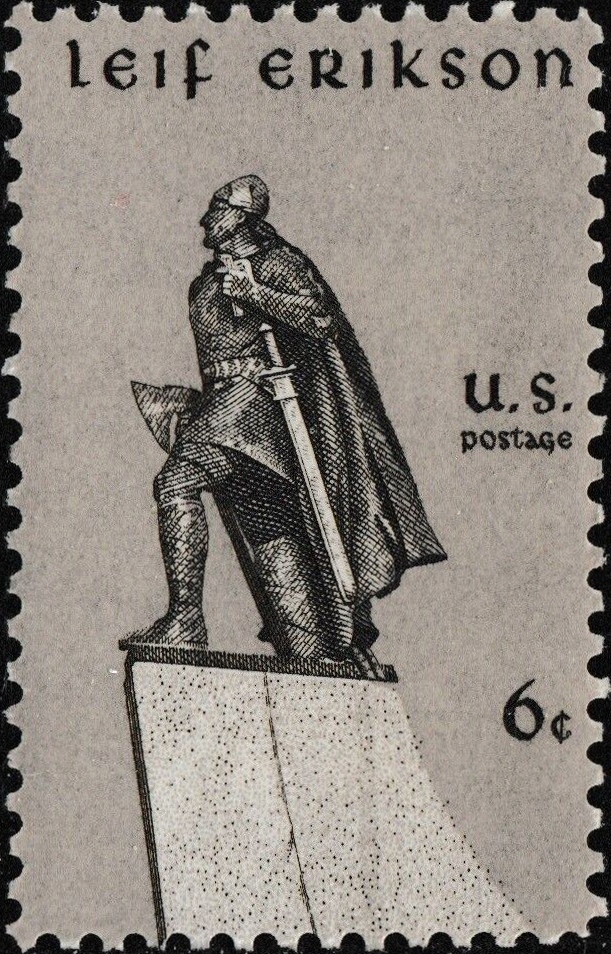
Leif Erikson, an all too forgiving brother


So, unfortunately, Freydis turned out to be a pretty horrible, greedy, merciless, thundering bitch, but either way, she is an interesting figure - a strong willed, courageous woman, but certainly not one to look up to or follow after - unless you fancy being secured in a psychiatric ward of a prison.

Wednesday, 3 July 2013

Vikings!


So History Channel's new series Vikings showed in April and started an obsession. Its second season is currently being filmed in Wicklow, near the beautiful Glendalough (and I'm still holding out hope that I'll get cast as an extra), and will be out next year.

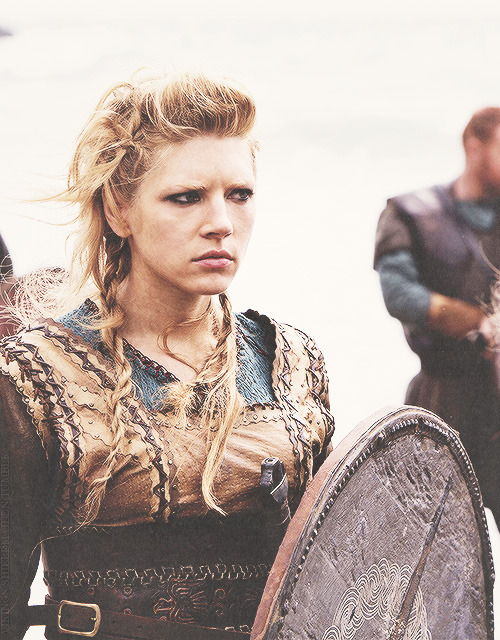
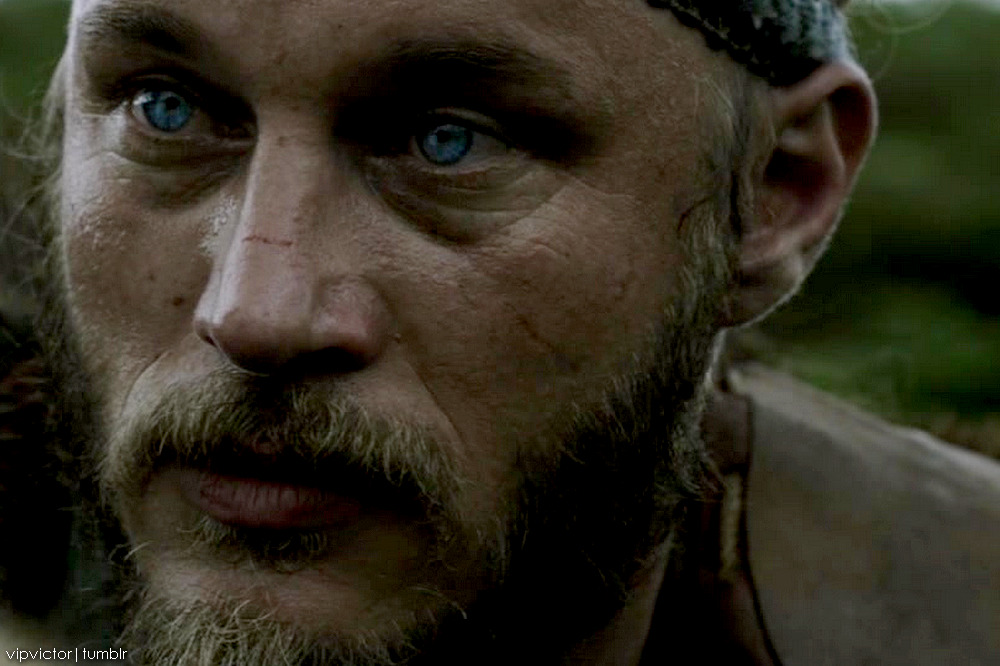
So, the fact that Vikings is attempting to be as close to history as possible is pretty cool, and there is a very authentic feel from it, and there is even a good attempt at the characters speaking a bit of Old Norse and Old English. Cooler still, is Lagertha Lothbrok, played by Canadian actress Kathryn Winnick. And Travis Fimmel's (who plays Ragnar) eyes deserve a mention too.


But anyway, back to Lagertha, who is my main interest, because she is one of those rare female characters who show that women are just as good as men when it comes to wits and battle (not me, personally, so don't take this as a challenge). And she's absolutely beautiful without being overly sexualised or turned into a mere ornament for viewers. And her hair, look at her hair! Basically, I want to be her. 

Anyway....I was interested to find that she was loosely based on a real life Danish shieldmaiden, and was also the real life wife of Ragnar Lodbrok (Lothbrok in the series). Lagertha's story was recorded in Saxo Grammaticus' History of the Danes, written in the 12th Century (and assumed to be mostly fictional by scholars such as Judith Jesch). Saxo describes her as so: 

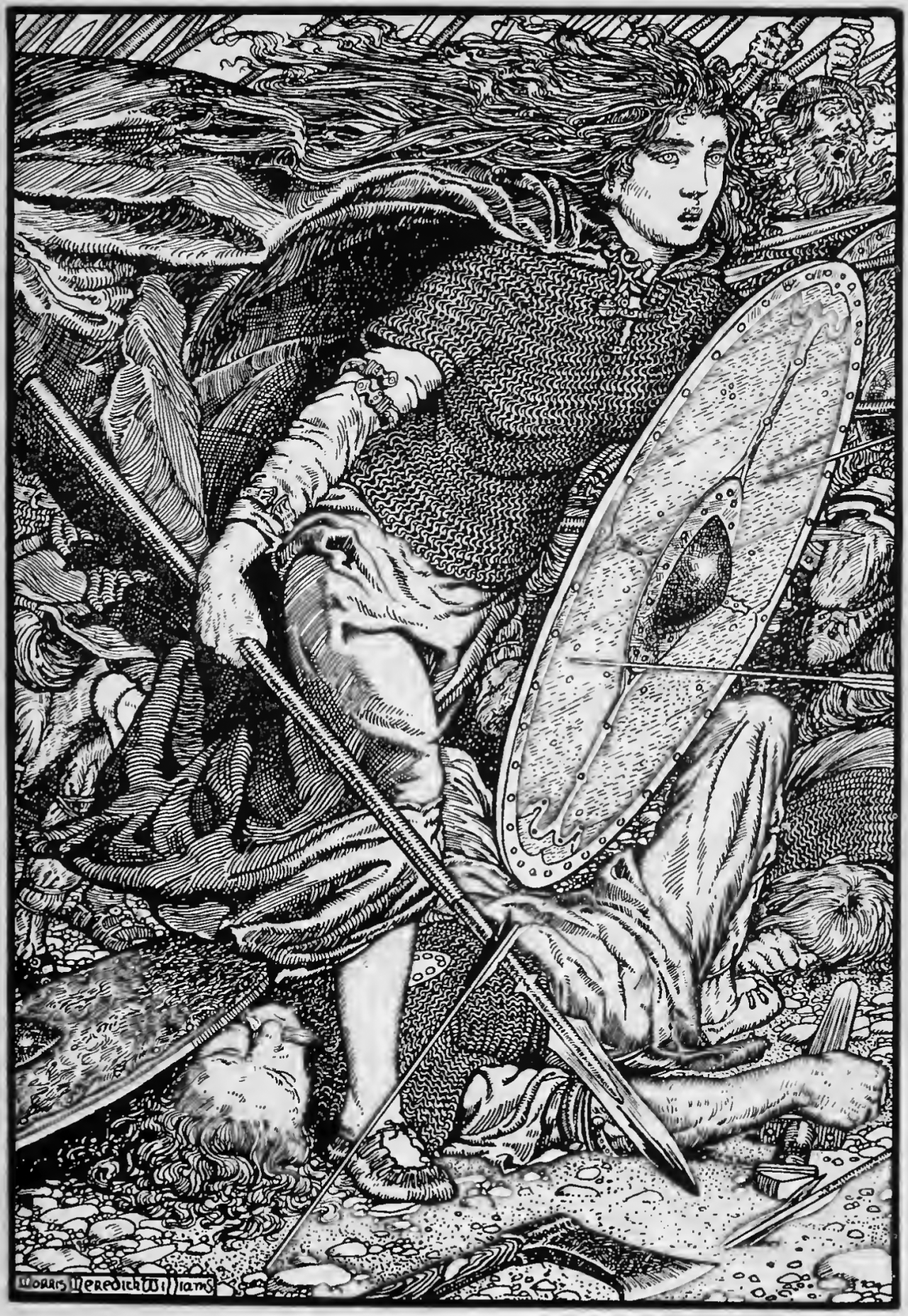
"Ladgerda, a skilled Amazon, who, though a maiden, had the courage of a man, and fought in front among the bravest with her hair loose over her shoulders. All-marveled at her matchless deeds, for her locks flying down her back betrayed that she was a woman."

Cool, huh? Lagertha's story begins when Frø, king of Sweden, invaded Norway and killed Norwegian king Siward. He subsequently ordered all the women belonging to Siward's family to be put in a brothel for public humiliation. And so enters Ragnar, who, hearing of this madness, comes to avenge his dead grandfather, where he first spots Lagertha across the dancefloor...I mean, battlefield..., who along with many other women under king Siward's reign, had dressed as men to fight alongside Ragnar. Ragnar's victory over Frø is said to be much indebted to Lagertha, who acted as chief among these rebelling women. 

Morris Meredith William's Lagertha, from 1913


And who can blame Ragnar for falling for her? During his courtship of Lagertha, Ragnar sent messengers to her and though "she spurned his mission in her heart, she feigned compliance". He eventually killed both a bear and a great hound which were guarding Lagertha's home - and so, he won her hand in marriage, and children were had. But...Ragnar then divorces Lagertha (as he's still pissed about the bear and the hound, apparently), to marry Þóra borgarhjörtr (or Thora Town-Hart), daughter of the king of Sweden. Upon his return to Norway, he was faced with civil war, and the ever-admirable Lagertha, who still loves him (sob) comes to his aid with 120 ships and saves the day. After this victory, Lagertha kills her second husband, "the presumptious and self-indulgent woman would rather rule without her husband than share the glory with him". 

According to the Tale of Ragnar Lodbrok's sons (Ragnarssona þáttr), Thora Town-Hart later dies of an illness, and Ragnar then marries Aslaug (aka Aslög, Kraka, Kraba or Randalin), daughter of Brynhildr (you may know her from Xena), who we were just introduced to in the final episode of season one (and who has nothin' on Lagertha!). 

I do plan on finding out more about Lagertha, but there doesn't appear to be many sources, and I have no access to the library :(