Showing posts with label Grendel's Mother. Show all posts

Monday, 9 May 2016

On nicera mere: This week on Room Raiders

Besides being in a perpetual state of terror over the IRC (which looks something like this), I am also coming to a close on the first chapter of my thesis. My current point of focus is the mere, and trying to articulate an argument that allows Grendel's mother to still be human while living here (because apparently it's not normal to live in a cave surrounded by sea-monsters??).

Firstly, I will start off by saying these are rather general musings - I will probably (hopefully) look back on these in a month's time and think "Christ...what rubbish", so do excuse the sloppy execution and rather basic arguments!

Anyway, we first receive an in-depth description of the mere by Hrothgar, where, in a semi-hysterical speech after the death of Æschere (before Beowulf is like "grow up, buddy - it is always better to avenge lost bros than to mourn them"), he says this: 

"They inhabit a hidden land - wolf-slopes, windy headlands, dangerous fen-paths - where a mountain stream flows downward beneath the cliff's mist. It is not far from here in miles that the mere lies. Over it hangs rind-covered groves - a wood held fast by its roots hangs over the water - there, each night, one may see a troubling wonder; fire on the flood, No living children of men know the bottom of that mere . . . That was not a pleasant place! From here, surging waves rise up dark against the clouds when the wind stirs up loathsome storms, until the sky darkens and the heavens weep" 
(1357-67, 1372-6, my own translation)

Virgil Burnett's depiction of the mere


It is a slightly confusing description - is this prime real estate by the sea (headlands, cliffs) or inland (in a forest in the mountains?). Well, it seems that where exactly the mere is, isn't necessarily the important thing, rather the nature of the mere. For one thing, if you invest in this property, you get your very own light show every night and you never have to worry about a hart jumping into your gaff. 

The description of the mere has often times been compared to Blickling Homily XVI, describing Saint Paul's vision of hell (which is also reminiscent of the IRC), which, to be fair, does have quite a few similarities, including a description of water flowing down, of frosty groves, of dark mists, and also the presence of nicras or 'nicors' (immature laugh), apparent sea-monsters.


Hieronymus Bosch's Christ in Limbo - Hell doesn't really look like this in the homilies, but I just love Bosch


It has been suggested that the mere in Beowulf has some borrowed content from this homily, or at least that they had a common source - it has also been argued by Carleton Brown, however, that the Homily borrowed from Beowulf  and the Visio S Pauli, as it shows shared elements from both of these, while Beowulf only shares elements with the Homily. It really depends on the dates of the two - the MS which the homilies appear in is dated to 971, while Beowulf...well, this is still and forever will be argued about, so let's not go down this fen-path. Either way, I think it is possible that Beowulf could have been a source for the homilies - it is, after all, generally agreed to be an oral poem, only written down later, so it seems conceivable that the homilist may have been influenced by the poem. 

Then again, it is also somewhat agreed on that elements of Beowulf would have been added into the poem, such as biblical references to Cain and the Flood and also of course to God. Whether we choose to view the description of the mere as a later addition... well... I guess that is something that is up for debate. 

A much more intriguing comparison, I think, can be made to Grettis saga Asmundarsonar, the story of a hard-ass Icelandic outlaw who loves to fight. I'll take him over Saint Paul any day!

Or...well...maybe not.

Anyway, while these Icelandic texts date to the 13th and 14th centuries, they are based on events which occurred a few centuries beforehand. So, Grettir gets up to all sorts of antics, but most important is what happens in Chapter 66; Grettir is hanging out one day when a troll-woman enters and starts fighting with him - she (like Grendel's mother) is really bloody strong and she gets away (after getting her arm chopped off...like Grendel) and disappears down a cliff. Grettir decides to follow her down. Grettir comes to a waterfall surrounded by cliffs, and he swims beneath the current to enter a cave. He then proceeds to fight a male troll, whom he kills, and whose guts flow out of the waterfall to make a lovely bloody mess (which reminds me of Chuck Palahniuk's short story Guts), which in turn makes the priest who has accompanied Grettir to think Grettir is dead (much in the same way that Grendel's blood which is said to bubble out of the mere makes Beowulf's thanes think he is dead). 

So...there seems to be an awful lot of comparisons here. Could the mere in Beowulf be a waterfall? The surging waves and the mist rising up to darken the sky could well be the mist rising from a waterfall. The churning waters which are described both when Grendel returns to the mere after his fatal fight with Beowulf and after his corpse is decapitated could merely (pun intended) be the churning waters of a waterfall. And similarly, Beowulf swims downwards to reach a dry cave - much like he would have to swim beneath a waterfall's current to reach behind (or you know, walk around or through the water as they do in films...). 

Of course, problems must also arise with this comparison, especially the countries of origin (Iceland vs England/Denmark) and the dating of these stories. It is possible that it is rather from  a common source or sources that these stories share their similarities. And this is something I am going to have to explore in more depth (pun intended).

Henry Justice Ford - Andrew Lang's Crimson Book of Fairy Stories

But what about the sea-monsters and the fyr on flode.....I'm going to end this one on a cliff-hanger (again, pun intended), and write about those things in a future post! 


Tuesday, 23 June 2015

Gaiman and the Golden Grundwyrgenne

It has been too long, but alas, my brain cells had run dry and my spirit was broken from the cataclysm known as the IRC, most famously depicted in Albrecht Dürer's The Four Horseman of the Apocalypse. 

Saying that, it hasn't been all bad, as I got to speak at the EMICS Stories and Storytelling in the Medieval World in University College London last April, where I spoke about Zemeckis's -let's be honest - god-awful adaptation of Beowulf, which this post is going to be about.


Despite the film's absolute over-indulgence in CGI, cringe-worthy quotes, and frat-boy-inspired antics, it must be said, the 2007 adaptation is one of the most engaged with the actual poem, and with scholarship surrounding the poem. This can't be too surprising, seen as the film's script was actually written by Neil Gaiman and Roger Avary. Neil Gaiman is a pretty adored author who obviously goes to a shitload of effort when researching his work (as we can see with American Gods) and he also has written two short adaptations of Beowulf  (Bay Wolf and The Monarch of the Glen which can be found in Fragile Things and Smoke and Mirrors). Roger Avary then, co-wrote the screenplay of Pulp Fiction and Reservoir Dogs and the screenplay for that mad bastard, Bret Easton Ellis's The Rules of Attraction - an impressive enough CV.

So it's safe enough to say the film's storyline was in good hands. Minus the terrible dialogue which included Hrothgar naming Unferth as "violator of virgins" and the mind-numbing song that would appeal to teenage boys and (hopefully) nobody else.

The most obvious thing that stands out in this Beowulf when comparing it to the Anglo-Saxon poem, is the sex. Especially the Grendel's mother sex. And the fact that she's a naked, high-heel-footed, golden, reptile (but sexy reptile) thing. Pretty much along the same lines as Graham Baker's less well-known 1999 adaptation, which was so bad that it was sort of okay (let's not get ahead of ourselves).


Despite this being an extremely sexualised view of Grendel's mother, and one which can be described as a great example of what Anita Sarkeesian calls the "Evil Demon Seductress" (think Megan Fox in Jennifer's Body, or Scarlett Johannsson in Under the Skin, or that roboty wan in one of the Transformers films - a trope which generally allows audiences to sexualise and demonise women at the same time), there is the possibility of there being a deeper meaning to this portrayal (not that the young men this film was obviously targeting gave even one solitary crap!).

As with most adaptations, it says something about its own time, the 21st century - a time where the main concerns are not anything like those of the Anglo-Saxon's, but circulate more around the self, with anxieties about sexuality and masculinity. Zemeckis's film could have left out the sexual element included, but heroes always get the girl (even if she's not really a girl, as in this case), and if Beowulf wasn't seduced by naked-golden-Ridley-Scott-Alien-Angelina, then there would be no doubt people would think, "what a fag, like, I'd totally nail her". Anxieties about homosexuality still exist, and the film-makers do not want to put Beowulf's sexuality into question. And if there's anything we can learn from films, it's morals (the couple always die first in the horror film, guys, so ABSTAIN. And the black guy always dies too...so...don't be black?). And because we live in a society where people are still shit-scared of sexually- and otherwisely powerful women, those women must be demonised, while the chaste Wealhtheow's of the world are revered.


But, there is a faint glimmer of hope. There lies the possibility that Jane Chance's article "The Structural Unity of Beowulf: the Problem of Grendel's Mother" had somewhat of an influence - in this article, Chance argues that there exist sexual undertones in the scene of Beowulf and GM's battle, with each other fighting for a dominant position astride the other and the ripping of chain mail and trying to penetrate each other with daggers and rolling about and, god, I gotta open a window. Seriously though, it's possible.
Of more importance is the sword, which in the poem, melts when Beowulf decapitates Grendel's corpse, but in the film, melts ("into gory icicles") when Grendel's mother caresses it, in the most obvious sexual innuendo in film history. And the poem itself seems to treat the giant's sword in the same way - it is described as being "a blade that boded well . . . an ideal weapon, one that any warrior would envy, but so huge and heavy of itself on Beowulf could wield it in battle" (from Heaney's translation). Like, seriously.


Maybe a stronger argument for the depiction of GM as a golden sex beast, is because of its (possible) influence by the work of Frank Battaglia, which seeks to view Grendel's mother as an ancient earth goddess, Gefjon (related perhaps to Freyja and Nerthus). Grendel's mother does look a bit more like a goddess than a monster (or normal woman as I like to argue!), right? And besides, in Caitlin Kiernan's novelization of the film, she mentions Nerthus, and other Germanic and Norse gods, for whom GM has been presumed to be. Despite appearing to be a rather obscure source of inspiration for a film, it seems to fit pretty well. I think. Whatever.

So, although at first the portrayal of GM is kind of ridiculous, and kind of roll-eyes worthy at first, it appears that some thought did actually go into her appearance, besides whatever would make the most money (although I'm sure this was priority!). It goes to show that some of these films can't be presumed to be uneducated pieces of garbage (most anyway!), and they are interesting to study in relation to their engagement with the poem. Basically, every adaptation has something to offer, whether in how it uses the poem to express its own concerns, and how it chooses to engage with the poem and with scholarship.

Tuesday, 30 September 2014

The Victorians and the ides aglæcwif (and I delve into the murky mere of tutoring)


I have (just about) survived my first week of tutoring Old English to second years, and....well, let's just say, I had expected university students to be a bit more communicative. Instead, it appears to be a "who can hold off responding the longest" competition. Am I just paranoid?....am I just stoned? If only I could go back to the times when listening to a Green Day album was the most productive thing I did in a day.


Whilst trying to maintain my sanity, the rest of my life must go on (my life being thesis, sleep, painting, thesis, sleep, staring into space, thesis). And the other thing my life appears to revolve around...Grendel's mother. Again?! Yes, again.


grendles modor ides aglæcwif


Today, I ask 'why'. Why has Grendel's mother been turned into the "monstrous ogress" with the "talons" and the wolfish ways and the gold paint and the scales and the everything?

I have pretty much established that she was not demonised by the poet himself, not even her actions (see previous posts!). Not even Beowulf and Hrothgar think she's doing something terrible. The only people who do think that, are the translators and scholars who decided secg means "warrior" for Beowulf, but shit, look, it's also used for Grendel's mother... eh, it probably means "creature" in that instance. Just put down "creature"...or I know, I know, "monster". Yeah, that's as accurate as we're gonna get here.

So, I recently started delving into this a bit deeper, wondering who the hell is the bane of my existence (and at the same time the reason I'm doing a PhD in this subject...thank you), and, well, I guess there's a few possible reasons.

The most obvious of these is that, firstly, she is the mother of Grendel, and is therefore assumed to be monstrous. Whether or not Grendel is as monstrous as he is assumed to be, this is not enough proof for his mother to be monstrous. Secondly, she is an antagonist, therefore is bound to get the short end of the stick (is that the phrase?? Hard end of the stick? The ugly stick?) when it comes to translating her.

Berit Åström argues that the reason for her characterisation, and for other women's dismissal, lies in the fact that in the 1800's (when Beowulf was first given much attention), history was viewed in a linear fashion - meaning that, in their opinion, the centuries got progressively more civilised. The Anglo-Saxon era then, must have been all about power, glory, and manstuff, meaning that female figures in history got ignored because they were presumably unimportant to the Anglo-Saxons. 

I think Åström was on the right track here - after all, for a period that treated women so horrendously, of course women were treated even worse by the Anglo-Saxons. I can picture a Victorian scholar musing over how much they'd progressed in their treatment of women in that 800 year gap. "Sure at least we're not as bad as those old Anglo-Saxons! Edith, get me some tea, woman!"

But there's most likely more to it than that. After all, the Victorian era was pretty renowned for its sexism, its lack of women's rights, and its strict confines to what femaleness meant.
Being a time of staunch Christian belief and conservative morals (carried on from the Middle Ages), the bible was a pretty big reference book on how to behave. Unfortunately for women, the bible is also a pretty misogynistic text.

Which are you?


And basically, when it comes to the bible, really only two kinds of women are prevalent. You can choose to emulate the Virgin Mary, submissive, willing to carry God's child (even though they hadn't even gone on one date yet - sluuuut) or you could emulate Eve, the one who overstepped the boundary and went against God's will (the patriarchy, man!). You can only be one or the other. You're either all good, or you're a FUCKING WHORE.

For the Victorians, this Virgin-Whore, Madonna-Eve complex was present, especially for middle and higher class women (while the working class made shit in factories and spoke in strong cockney accents according to TV). But it was probably more present in an angel-demon dichotomy. For some strange reason, in the 1800's, the ideal woman started to be seen as an angel - whereas before this, angels were muscled, androgynous figures with spears (or freakishly muscular babies). The ideal woman's role revolved around marriage and childbirth and the homestead and shutting the fuck up. And somewhere along the line, the terms 'angel' and 'domesticity' seemed to become almost synonymous, as Auerbach argues (in Woman as Demon). This possibly started with Coventry Patmore's poem "The Angel in the House", which was basically “a convenient shorthand for the selfless paragon all women were exhorted to be, enveloped in family life and seeking no identity beyond the roles of daughter, wife, and mother” (Auerbach, 69).


And so, those women who were not the ideal, who were not submissive and domestic, were often to be seen as monstrous (not necessarily Alien or those terrifying things from The Descent (shiver) type monstrous) or often were described with imagery harking back to the Fall, categorising them as snake-like. Basically, unfeminine actions like physical exertion and having an opinion made you monstrous.

Furthermore, a 'discipline' that was very popular in the Victorian era was that of physiognomy - basically, the assessment of someone's character by their outward appearance. Fierce scientific stuff, really! Yet its impact appears throughout Victorian literature (and still somewhat today), in works of Dickens, Brontë, Wilde, Austen, and more, and was also influential on art. Even if you look at old illustrations of suffragettes, they are often characterised as ugly women (who probably couldn't get a man anyway - why does this sound familiar! Still!). Bad guys were, and still are, often made to look like bad guys. And women who did not fit the ideal of the angel in the house (prostitutes, spinsters, feminists, female authors, fallen women), were often illustrated as ugly


Physiognomy in 19th century illustration - maybe the guy on the left has a fiery temper, harhar.


So...what the hell did these moral crusaders do when it came to Grendel's mother and translating her for a modern audience? Well, they could not have that blasphemy going unchecked (A woman? Fighting? Killing? Never!), so the easiest way to deal with it is *BAM*, tell everyone she's a monster and make her reaaaallly ugly!
Who knows if she was actively changed or subconsciously believed to be representative of a monster anyway? Perhaps a bit of both? Don't ask me anyway.

This is something I hope to immerse myself more in, and at the end of the day, it's all a bit of guessing and a bit of speculation. Any other opinions (opposing or otherwise) are very welcome.


Wednesday, 6 August 2014

Wife of Cain


Okay, first of all, the suggestion that Grendel's mother is Cain's wife is a ridiculous one (but hey, what can we expect from yahoo answers), but I have decided that if in the very unlikely event I start a death metal band, it will be called Wife of Cain. WIFE OF CAAAAIN.


And yes, I downloaded a font to make my dreams more solid. It's a slow study day. It's almost as illegible as some Anglo-Saxon manuscripts. 

Back to the issue at hand then... well first things first, Cain is obviously not Grendel's wife because...well...time. For us measly human beings, we perceive time as linear, and Cain could not have existed both for numerous generations before the Flood and the many many years after the Flood that Beowulf is set. Cain, you are NOT the father! If that's not a condescending paragraph then I don't know what is! Please accept it as the lowest form of humour. But you must admit, that would make for a great Jeremy Kyle episode, eh? I think it could even push for a two hour Christmas special.


*facepalm* Cain by Henri Vidal


As a side note, do you know how hard it is to find a decent artistic depiction of Cain where he's not bating the shite out of Abel or walking into exile? 

Now, to start taking things a bit more seriously. The issue on the table today is Grendel's relationship to Cain, and whether or not she is descended from him as Grendel is. 
Firstly, Grendel's mother is never described with such devilish language as Grendel is. Grendel, throughout the poem, is called Godes andsaca ("God's adversary"), a feond on helle ("enemy from hell"), he is fag wið God (not what you're thinking, but "hostile with God"), he is helle hæfton (a "captive of hell"), and when he finally dies, him hel onfeng ("hell received him"). I mean, he has a pretty strong connection with hell here, and it seems he's not on the very best of terms with God (although I imagine raping and pillaging put the Danes not too far down the naughty list also). Grendel is a bad guy, he commits serial murder for no exact reason, except that he was possibly feeling a bit left out or the scop's mainstream music choices just weren't to his taste, but basically he is like Historic Denmark's high school shooting perpetrator. 


The story of a mother's struggle to control her son, spawn of Cain, eotan


On the other hand (not Grendel's other hand anyway, harharr), such language is never used of Grendel's mother - she is called sinnige ("sinful, guilty"), sure, but that's about as far as the narrator calls her that has any relevance to God. She doesn't commit rampant murder like her son does, and her only crime is to avenge him...which in Old Norse society was not a crime - she follows the rules of wergild, an eye for an eye sorta thing - but that's about it. 

As to her relation to Cain...well, we know Grendel is related, because it is said twice in the poem, and referenced once more. Whereas Grendel's mother, although we are told se þe wæteregesan wunian scolde cealde streamas siþðan camp him wearð to ecgbanan angan breþer fæderenmaege ("She who dwelt in terrible waters and cold streams since Cain raised the sword against his brother, his father's kin"), once Cain is mentioned, the narrator says þanon woc fela geosceaftgasta wæs þaera Grendel sum ("from him awoke many spirits, Grendel among them"). Edward B. Irving argues, “the total effect of this passage, illogical as it may seem, is to suggest that Grendel is a lineal and faithful descendent of Cain in a way that his mother is not . . . she appears in no theological context” (Rereading Beowulf 71). Of course, this is up for speculation, but it does seem rather odd that the poet says Grendel was among his descendants, yet doesn't say his mother is. 

Again on line 1352, when we are told that the Danes knew about two figures mooning about the marshes, Hrothgar tells us of Grendel's mother, then of Grendel, and only says Grendel walked in the tracks of the exile (Cain). If he meant for Grendel's mother to be related to Cain, could he not have just said so, the way he is constantly telling us that Grendel is? Come on, man, stop beating around the god-damn bush!


Sticking to this paragraph, WHY THE HELL DID HROTHGAR FAIL TO MENTION ABOUT GRENDEL'S MOTHER? Well...one possibility is because she was not a monster and therefore not a threat to Heorot. Either that or Hrothgar is a fucking dope. But I am going with the former, because hey, let's give him a bit of credit. Sure, the poem is full of some unbelievable things, but I think Hrothgar's a guy I could trust.

So....how is Grendel related to Cain? Well...there's quite the possibility that there is a father. I mean, that's how reproduction works right? And seen as all the evidence (in my humble opinion) points towards Grendel's mother being human, then I don't see how there couldn't be a father....except...if...wait.. maybe it's an immaculate conception... and Grendel is Christ, and Beowulf represents the Jews. Oh god, I think I'm definitely onto something here, shove over Frederick Klaeber. On a more serious note... no, she isn't analogous to the Virgin Mary, and no, I don't think she impregnated herself (unless she's a komodo dragon). So yes, I think there's quite the possibility that a father exists. I know Seamus Heaney calls them "fatherless creatures" whose "ancestry is hidden in a past of demons and ghosts", but if there's one thing I try to express in my blog-posts it's "ixnay on the anslatorstray", because what is said is:
no hie fæder cunnon, hwæþer him ænig wæs acenned dyrna gasta
Which I will now use my super translating skills (yep, don't trust me either, I'm one of them *theme music to The Twilight Zone*) as "They do not know the [or 'a'] father, or whether any mysterious spirits were born before him". So, it's possible. This, coupled with the fact that Grendel's mother is never explicitly mentioned in any theological contexts, suggests that a paternal link to Cain could well exist.


See, Grendel has a hunk of a daddy in Gunnarsson's adaptation


Then, on top of all that (yes, even more is coming, God hilpeþ þu), there's the whole thing about the melting of the giant-sword. Well, it only melts after Beowulf beheads Grendel. It could have just conveniently been waiting for him to behead him before Grendel's mother's blood decided to set in, but...no. No? 
On top of this, after Grendel is beheaded, the water in the mere goes a bit 2012 apocalyptic on us - the water turns bloody and turbulent - ". . .the turbulent water saw blood drifting up, a churning foam; the spreading stain was dark, lake-wide" (Chickering) - much like a scene from Jaws. And yes, this is sometimes attributed to Grendel's mother's death also, but good woman herself, M.W Hennequin notes that the mere does the same thing the night Grendel returns home to die“There the lake water boiled with blood, terrible surgings, a murky swirl of hot dark ooze, deep sword-blood". 

And one last thing (I promise....for any of ye still left reading...ie, nobody), she is never described as an eoten ("giant", or possibility of "blood-thirsty one" - see Signe Carlson). Both her and Grendel are called micle, "large" or "great" (literal or metaphorical), yet a few lines later Grendel is described as being the one who is "bigger than any other man" and "misshapen/ wretched-looking" and it is only about Grendel that it is wondered hwæþer him ænig wæs acenned dyrna gasta. 


Just saying.

Saturday, 2 August 2014

In which I continue to defend the mihtige grundwyrgen


Grendel's mother by Virgil Burnett


Yes, I'm back at it, back to defend Grendel's mother's glory - DEATH BEFORE DISHONOR.

In my last defence of Grendel's mother I didn't go into very much detail about a number of terms (partly because of mid-post fatigue and partly because I probably didn't have that much evidence - yet in my heart I knew, I knew, I was right (this is up for speculation of course)).

In general the only scholars who have really looked into Grendel's mother's character and questioned her monstrosity and some of the outlandishly wrong translations that were applied to her (such as "most evil monster" for secg (warrior/hero) by Crossley-Holland - like, wut?), are limited to Christine Alfano, M.W Hennequin, and Signe M Carlson (although she (/he? - someone please confirm this for me!) focuses more on Grendel's character). Sherman Kuhn in his study of aglæca also helped to clear up issues surrounding the monster/hero/formidable one/blahblah disaster there (something I wish to return to again, despite the fact that it has been DONE TO DEATH). 

Anyway, a few terms haven't really been given so much attention as brimwylf, grundwyrgenne and secg so I kind of wanted to return to those words and try make a convincing case for how they are not monstrous terms, despite what translators keep telling us (BTW I found three translators who translated  aglæcwif as it should be - George Jack, Dobbie and Wrenn - unfortunately, all these are glossaries and not full translations - booo). 

I will begin at the point where I began to slack off in this blog post with . . .

wif unhyre (2120) - A few examples of this terms translations are as follows: "ghastly dam" (Heaney), "monstrous woman" (Chickering), "the gruesome she" (Alexander), and "inhuman troll-wife" (Tolkien). Inhuman troll-wife? Really, Tolkien? Not that his dismissal of her is very surprising seen as he completely forgets about her in Beowulf: The Monsters and the Critics. 
But if we look at wif unhyre and split it up, we have wif, which is “i. woman, a female person . . . iii. a married woman, a wife . . . iv. a female” (Bosworth-Toller). Of course this dictionary also adds a separate entrance for wif , "a being in the form of a woman", under which we find Grendel's mother as an example, along with a reference to Bald's Leechbook for the charm "For a Sudden Stitch". These wif however, are not actually physical beings, but metaphorical wif. I don't think Grendel's mother really belongs in the same category as beings that don't even have a physical form, and more so beings that do not even exist except in a cute "oh sure that sudden stitch you have is just some little women throwing spears at you", especially when there's not enough evidence for her being something other than human (in mine own opinion). 

Anyway, if we take wif as what it means for every other sense of the word (ie WOMAN), we can move on to unhyre, which is shit tons more complicated. 
It is often used in this case (and other cases) to imply monstrosity, but I believe it actually means "terribleness" or "cruelty" or "ferocity". Because there are many instances where it just would not make sense if it were to mean "monstrous". Unhyre appears in Genesis A to describe Ishmael - Se bið unhyre, orlæggifre, wiðerbreca wera cneorissum – “He shall be rough, warlike, hostile to the races of men” (2287 Mason), or alternatively “He shall be fierce, battle-greedy, and an enemy to the men of his generation, his own kin” (Hostetter). Wouldn't it be fierce feckin' odd if the author of Genesis A was to describe Ishmael as monstrous or ghastly or inhuman or gruesome? Eh, yeaah, it would. 
Aaand, it appears in An Old English Martyrology as unhyran cwelres, cwelres beaing "executioner" - Cruel, terrible, grim, (anything besides monstrous) fits way better here. Unless they were a very open-minded culture and perhaps hired a panotti or maybe even a sciopod. Because yes, although it could mean "monstrous" in the sense that murderers are monstrous, then that also applies for Grendel's mammy. 
Again, the word appears in The Meters of Boethius in Meter 29 – on wintres tid, weder unhiore, “in time of winter, when fierce is weather” (61), as it is translated by Sedgefield. Again, rough, fierce, terrible makes much more sense here.


A page from the OE Genesis in the Junius MS 


It is also handy to look at Icelandic and Old Norse and all the languages that share similarities with Old English, and the Icelandic word uhyrr stands out as a possible relative, itself meaning "frowning" or "unfriendly looking". 
And it's also great to look at its possible antonym, heoru, hyre, or heora, defined as "pleasant gentle or mild" (B-T). It appears in Beowulf on line 1372 (Nis ðæt heoru stow – “that was not a pleasant place”), in Genesis A (Culufre fotum stop on beam hyre – “the gentle bird stepped with her feet on a tree” (Hostetter)). Surely the antonym of "pleasant" or "gentle" would be "unpleasant", "cruel", "awful", "grim" and not "monstrous". 


I think I wrote enough there to last at least however long it takes me to build up the motivation for another post. 'Til then, here are some great medieval manuscript images

Also.....eh....


Tuesday, 11 March 2014

Grendel's Mother: Warrior Princess!


Unlike most of my friends, I wasn't very much a television child, and so I missed out on Xena: Warrior Princess (along with Saved by the Bell, The Fresh Prince of Bel Air, and Friends - which apparently makes me a freak of nature, causing people to gasp when I admit to these facts). But, little did I know that when I was doing my MA I would be faced with the program which I associated so much with strange costumes and even stranger shouting.


I am in China now? Whut? I share your confusion, Xena.


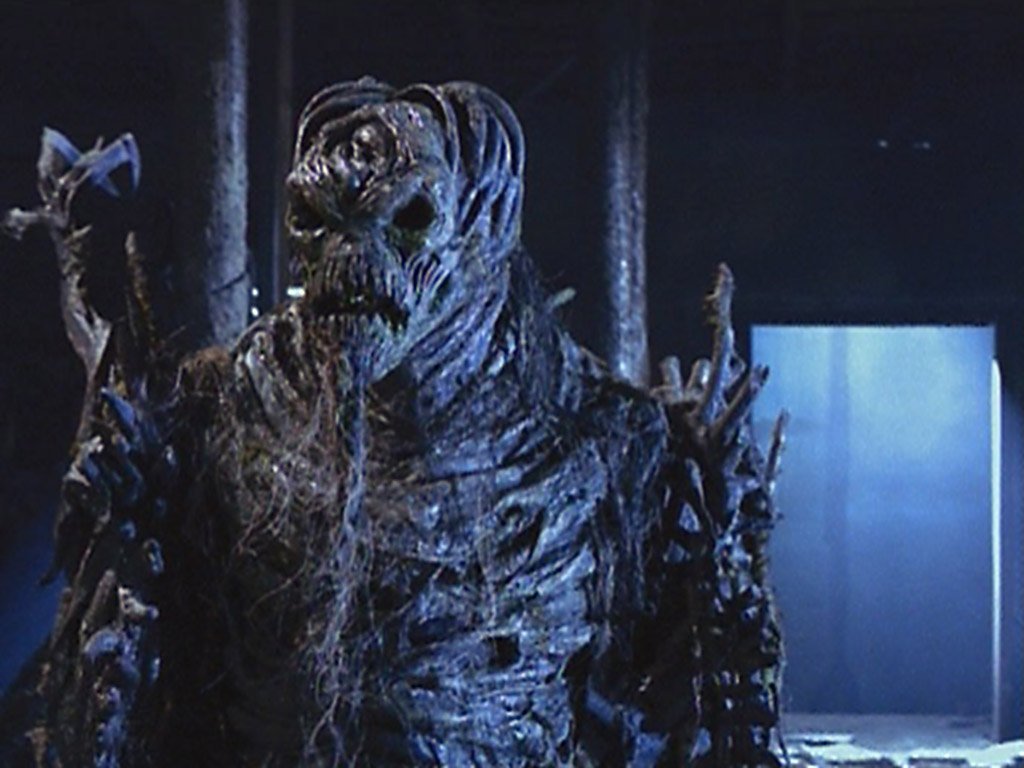
Anyway, strangely enough, Xena appears to be one of the very few out of the many adaptations that presents Grendel's Mother to us in an explicitly positive light. Even when she looks like the giant cockroach from Men in Black, we still think she's pretty okay. 

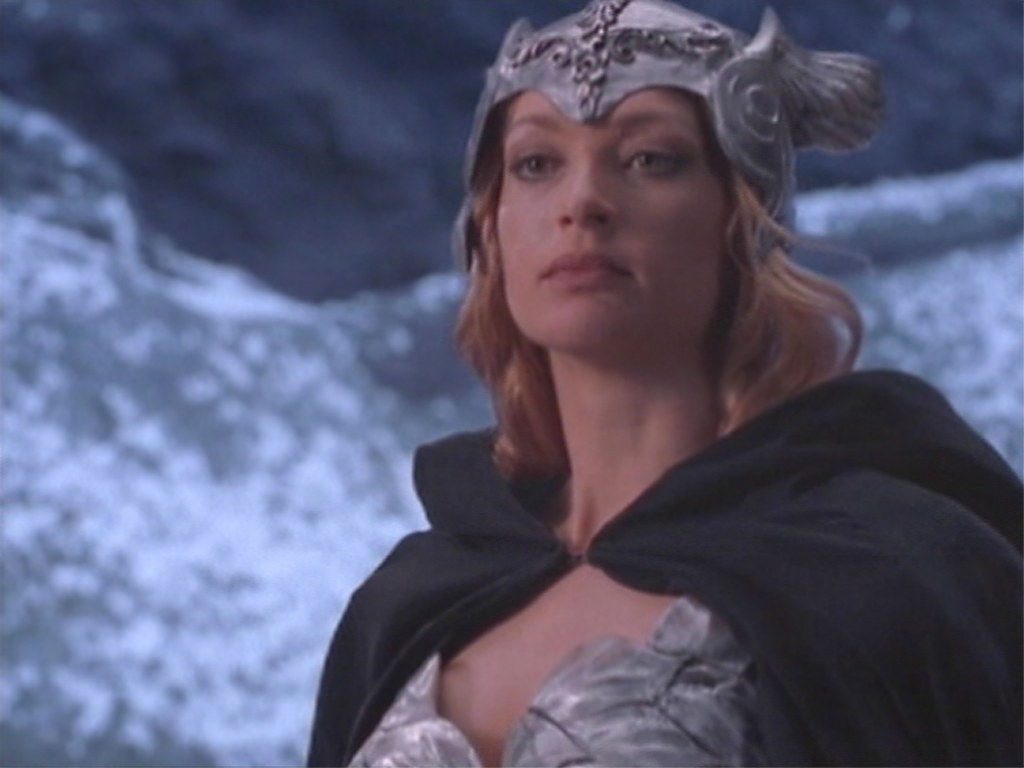
So, Grendel's Mother appears in three episodes of Xena from 2000 - "The Rheingold", "The Ring" and "Return of the Valkyries". She appears as Grinhilda, chief of the valkyries and lover of Odin. Beowulf and Grendel (who appears as Grindl) also appear in these three episodes but don't really have much importance...cause...well, it's Xena

At the start of "The Rheingold" we see Grinhilda through a flashback, where she appears as the extremely powerful giant turd/cockroach fighting Xena for possession of the Rheingold (a magical ring from Richard Wagner's 19th century opera, Das Rheingold, itself influenced by Norse and Germanic mythology - the Rhine gold can be made into a ring which will let its bearer rule the world, so long as he or she has renounced love). 


Grinhilda


Xena and Grinhilda have a bit of a tussle before Xena manages to lock Grinhilda in a cave. We are then taken to the present day, where the story of Grinhilda is recited by the character Brunhilda (prepare yourselves for a long-winded and probably confusing retelling of these episodes): 
Back in what is known as Xena's "dark days" (try not to laugh), Xena is chosen by Odin as a valkyrie. Unlike the peaceful Grinhilda, Xena is absolutely gagging for some fightin' and blood spill. In her attempt to gain more power, Xena visits the three Rhein maidens and steals the Rheingold from them, and smelts it into a ring (as the dwarf Alberich does in Wagner's Ring Cycle). Grinhilda, being a good girl, tries to stop Xena from using the ring, and so, places it on her own finger, where we see her transformed into the monster she has become, for she has not forsaken love. The ring destroys that which is most loved by the wearer - in this case, it is Grinhilda's own beauty and humanity. 


Grindl - and what a handsome boy he is


We are then brought back to the present day, where Xena and Beowulf (who has called on her help) are seen fighting a monster who is revealed to be Grindl (Grendel - and presumably Odin's son). They manage to kill him and we are shown Grinhilda mourning his death, and presumably intent on revenge (who would Grendel's Mother be without revenge?), and she then shows up, along with Odin, to fight Xena. Xena then places the ring of power on her finger, but, surprise surprise, it turns out the Xena has not forsaken love either, and loses her memory. 

The next episode presents to us the amnesiac Xena who is now known as 'Wealthea' (an obvious reference to Wealhtheow) and is marrying Hrothgar. Thankfully, Beowulf shows up and reminds her who she really is, and she can go back to fighting Grinhilda. Rather than fighting with her however, she convinces Grinhilda of her former humanity, and she is transformed back into her good old self. Funnily enough, with this, all is forgiven (even Xena's killing of her son...) and Grinhilda returns to her former valkyrie job. 


So! That's that. A rather confusing retelling, interlaced with a lot of Norse and Germanic Mythology and obviously influenced very much by Wagner's opera. But... it must be said, it's original, if a bit silly at times - but then again, it is Xena. It is very much like Parke Godwin's Tower of Beowulf, with its strong threads of Norse mythology as well as a very complex Grendel's Mother,, but that is for another day.

I'm going to focus more on Grendel's Mother as she is depicted here. I know I said she was explicitly positive in this, and then went on to talk about how she was a giant turd-monster, BUT, this is a positive retelling of her character, because it's not her fault that she turns into a monster (it's actually Xena's fault), and her extreme humanity and noble background are very much pushed in this. She is physically cursed and turned into a monster, very much like critics and translators have turned the Grendel's Mother of Beowulf into a monster (I'm getting deep here). Also important, is the fact that unlike Zemickis's or Baker's adaptations, her human form is not capitalised upon, and she is not overly sexualised.


And what about Grendel's Mother as a valkyrie, one of the "choosers of the slain"? Although it seems like a bit of an unorthodox view, and simply another norsification of the story, it's not an unfounded view, as Helen Damico (in "The Valkyrie Reflex in Old English Literature") argues that the valkyries were "half-mortal, half-supernatural beings called idisi in Old High German, ides in Old English and dis in Old Norse". Damico believes that the Beowulf poet is characterising Grendel's Mother as one of these "deadly battle demon[s]". She is after all, called an ides aglæcwif and a wælgæst wæfre, which Damico translates as "roaming slaughter-spirit". Damico also suggests that Grendel's Mother's protective covering may relate to the helm and byrnie of the valkyries. 

Although I'm not necessarily agreeing with this view of Grendel's Mother as a valkyrie, I am pointing it out as a possible influence on Xena's depictions of her, as, I feel, many adaptations, especially film or television adaptations, are often not given credit for researching their sources or the scholarship surrounding them. Of course, the writers of Xena may not have even heard of Helen Damico, but I will give them the benefit of the doubt, and either way, such depictions, whether or not based on an already established theory, can offer new possibilities and new ways of viewing the original poem. 

Overall, for once, Grendel's Mother plays a pretty important role, one more important than both her son and Beowulf. In general, Xena (along with shows like Buffy) is one of those shows that differs from the rest, in that its centred on female figures, but as well as that, it's characters rely less on their sexuality (as so many unfortunately do) than on their physical strength and cunning - they are some of the few accessible feminist role models available in mainstream culture (Girl Culture). And there is nothing bad about that, no matter how cringey Xena may be.

Tuesday, 18 February 2014

Raping the darkness, d-d-death by his side

So I have had the misfortune to hear Marillion's SEVENTEEN minute long song 'Grendel'. About one minute in I couldn't help but be reminded of Spinal Tap's 'Stonehenge' (except at least that's actually good). Apologies in advance to any Marillion fans. Let's agree to disagree.


Grendel: 


I. Heorot's plea and Grendel's awakening 

Midnight suns bid moors farewell, retreats from charging dusk 
Mountain echo, curfews bell, signal ending tasks 
They place their faith in oaken doors, cower in candlelight 
The panic seeps through bloodstained floors as Grendel stalks the night 

Earth rim walker seeks his meals 
Prepare the funeral pyres 
The shaper's songs no longer heal the fear 
Within their eyes, their eyes 


Wooden figures, pagan gods, stare blindly cross the sea 
Appeal for help from ocean fogs, for savior born of dreams 
They know their lives are forfeit now, priestly head they bow in shame 
They cannot face the trembling crowd that flinch in Grendel's name 

Earth rim walker seeks his meals 
Prepare the funeral pyres 
The shaper's songs no longer heal the fear 
Within their eyes, their eyes 

As Grendel leaves his mossy home beneath the stagnant mere 
Along the forest path he roams to Hrothgar's hall so clear 
He knows that victory is secured, his charm will testify 
His claws will drip with mortal blood as moonbeams haunt the sky 

Earth rim walker seeks his meals 
Prepare the funeral pyres 
The shaper's songs no longer heal the fear 
Within their eyes, their eyes 

II. Grendel's Journey 

Silken membranes span his path, fingerprints in dew 
Denizens of twilight lands humbly beg him through 
Mother nature's bastard child shunned by leaf and stream 
An alien in an alien land seeks solace within dreams 
The shaper's lies his poisoned tongue malign with mocking harp 
Beguiling queen her innocence offends his icy heart 

III. Lurker at the Threshold 


Hounds freeze in silence bewitched by the reptile spell 
Sulphurous essence pervades round the grassy dell 
Heorot awaits him like lamb to the butcher's knife 
Stellular heavens ignore even children's cries 

Screams are his music, lightning his guide 
Raping the darkness, death by his side 
Chants rise in terror, free round the oaken beams 
Flickering firelight portraying the grisly scene 

Warriors advance, prepare for the nightmare foe 
Futile their sacrifice as even their hearts must know 
Heroes delusion, with feet in the grave 
Lurker at the threshold, he cares not for the brave, he cares not for the brave 

So you thought that your bolts and your locks would keep me out 
You should have known better after all this time 
You're gonna pay in blood for all your vicious slander 
With your ugly pale skins and your putrid blue eyes 

Why should I feel pity when you kill your own and feel no shame 
God's on my side, sure as hell, I'm gonna take no blame 
I'm gonna take no blame, I'm gonna take no blame 
So you say you believe in all of Mother Nature's laws 

You lust for gold with your sharpened knives 
Oh when your hoards are gathered and your enemies left to rot 
You pray with your bloodstained hands at the feet of your pagan gods 
Then you try to place the killer's blade in my hand 

You call for justice and distort the truth 
Well I've had enough of all your pretty pretty speeches 
Receive your punishment, Expose your throats to my righteous claws 
And let the blood flow, and let the blood flow, flow, flow, flow


And there you have it. I'm not sure what makes me more embarrassed; the picture chosen for the video, the comments that say things like "Most unique, beautiful, fantasy, heroic song ever" or "Breath taking. gasping for air!" or the awful lyrics.
I feel bad for being so critical of this, but it really is awful. Apologies again to Marillion fans (as if any exist). On a good note however, the song is obviously influenced by Gardner's Grendel and some of the lyrics (despite their cheesiness) are....thought provoking? The last section of the song at least. 

Unfortunately for Grendel, his name hasn't had much look in the music industry, with the likes of this. It's also of little surprise that there's a Finnish power metal band also named Grendel. Those Finnish lads are crazy anyway. Whereas at least Grendel's Mother gets a good song, which I previously posted about. 


I think this explains everything


This is the kind of stuff you're driven to listen to (and write about) when you're supposed to be doing an assignment. But hey, at least I'm not doing something completely irrelevant. 

Sunday, 5 January 2014

PhD, or Goodbye Outside World


This will definitely be me


So, next week I start my PhD, and so, the end of my life as a free-woman shall ensue. There will pretty much be no changes to my blog seen as I'm concentrating on Beowulf and modern media, but I will be expanding my interests to Beowulf and Grendel, and not just the love of my life, Grendel's Mother. I am kind of wondering what the hell I have gotten myself into and if I'll get out of this alive, but fingers crossed I will get through this and emerge as someone who will hopefully be able to get a job, hopefully in my area of interest - best case scenario.

I started this blog for myself, as a means of trying to throw around ideas for this PhD notion I'd got into this head of mine, and cringe at my attempts at humour, and it has really helped me, and has grown into an empire with TWO followers (they're not even people I know personally, wow!). I would like to thank my friends who read my posts for god-knows-why reason, and I especially want to say a big thank you to Angelina Jolie for generating most of my page views...oh, and Eowyn's boobs of course!:


A screen print of the search keywords in the last month


Odin-speed

Sunday, 25 August 2013

What do Praying Mantises and Angelina Jolie have in common?


I think it's about time we sit down and talk about the elephant in the room - the elephant in question being Angelina Jolie. Anyone who has read Beowulf (or those who sat in lectures pretending to have read it - I'll admit, I was one of them. And now look at me!), and who was expecting the sea-hag-witch-of-the-sea-demon (I was also once one of these people), was probably thinking "Really? Did these assholes even read the godamn poem?"...It would have been a lot more fitting if Angelina Jolie and Brendan Gleeson's roles were switched, right?

Well, as it turned out, I was wrong. Well...sort of anyway. Angelina Jolie is actually a lot more suited to play Grendel's Mother than any CGI monsters! However, it must be stated that this Grendel's Mother also raises other issues, which we will get to.

Before we continue with Angelina Jolie, I think it's good to look at one of the most cringy adaptations of Beowulf ever made. You may know it from the techno soundtrack, Beowulf's peroxide locks (it was the 90's, and Beowulf wasn't getting left behind with the fashion!), the extremely high rate of back flips, and its impressively low 3.8 IMDb rating.


I'm bringing up this embarrassment of a film because of its very own Grendel's Mother...Layla Roberts. Who knows what Graham Baker was thinking when he decided "Yes, a playboy bunny, that is exactly who I need to play Grendel's Mother! And you know, hey, seen as she is involved in that whole industry, we may as well add in some soft porn scenes!". They even crimped her hair, to make sure that in years to come we could look at this film and shout "the nineties!". And yet, this film seemed to be a huge influence on Zemickis's 2007 version - with regards to nudity and storyline. Danél Griffin thought that many scenes in the film seemed "so absurd and outlandish that we wonder if the writers, Mark Leahy and David Chappe, have even read the poem." I'm with you there, man.


Hrothgar, you dog!


Despite all the negativity directed at this film, this, along with Zemickis's version, gives Grendel's Mother a much larger role - she gets a god amount of screen time and she can speak! She doesn't appear to us as an irrational beast, like in Grendel, Grendel, Grendel or Outlander, or in Beowulf and Grendel (to a slightly lesser extent) - she appears as intellectually powerful, even if it is in a manipulative manner. A big thing for me was that she appeared to us in a human form (me being with the "Grendel's Mother is a Human too" campaign), but alas, this is too good to be true, and she is revealed to be a giant praying mantis (in Baker's) and that Alien-esque style creature in Zemickis's.

I don't think it's any mistake that Layla Roberts turns into a praying mantis - the praying mantis, along with the black widow spider and the Venus fly-trap plant, and poison ivy etc etc etc, are often associated with the 'seductress' woman, and sometimes with women more generally. Anita Sarkeesian argues that these insects and plants have become "the inspiration for a whole trope of sexy female characters", seemingly stemming from a misconception about female praying mantises biting their male counterparts heads off - as it turned out, this was indeed a misconception, yet unfortunately the myth lived on in the belief that sexually powerful women are dangerous. Sarkeesian calls this trope the:
evil demon seductress... a supernatural creature usually a demon, robot, alien, vampire most often disguised as a sexy human female. She uses her sexuality and sexual wiles to manipulate, seduce, and kill, and often eat, poor hapless men, by luring them into her evil web ("Tropes vs. Women #4)


Layla Roberts really pulling off a praying mantis


In both films, Grendel's Mother fits this description. She seduced Hrothgar, most likely for producing a son who will later attack Heorot and be the rightful king. In the 2007 version, this is taken a step further, and Angelina and Ray Winstone give birth to a beautiful baby dragon. So, despite the good news that Grendel's Mother gets more airtime, the films have the extra issue of demonising women. These films portray women as manipulative and controlling, using sex to fulfill ulterior motives. The use of Layla Roberts or Angelina Jolie only adds to the sexism - as Sarkeesian states, "when an evil demon seductress is on screen, men get ot objectify her while having these sexist preconceived notions that women are in fact manipulative and deceitful", and as Bill Schipper tells it, "nothing terrifies a male audience more than a physically and sexually powerful woman"

David Marshall states that Beowulf (2007) attempts to criticise the masculine power system and its inability to control desire. Both Hrothgar and Beowulf cannot resist Angelina Jolie's golden breasts. Furthermore, Heorot appears to us as some sort of Anglo-Saxon frat-boy party house, where Hrothgar (Anthony Hopkins) encourages "fornication" and praises Unferth (John Malkovich) as "violator of virgins". All the men appear to act on physical whims, whereas the women of the film, like Grendel's Mother and Wealhtheow act on reason. Unfortunately, the film kind of fails in this criticism when they decided to turn Grendel's Mother into a digitally enhanced, naked, golden Angelina Jolie, whose body "caters to the same hyper-sexualised function of masculine desire that drives Beowulf in Zemickis's film" (Marshall). In the end, the only character who gains our respect is Wealhtheow, who also preserves her chastity, whilst Grendel's Mother's powerful sexuality is made unnatural and monstrous. 


In the writing of this post I also found out that someone on Youtube has a pet praying mantis named Angelina Jolie. I wonder if they realise the depth of that choice.