Showing posts with label Anglo-Saxons. Show all posts

Tuesday, 23 June 2015

Gaiman and the Golden Grundwyrgenne

It has been too long, but alas, my brain cells had run dry and my spirit was broken from the cataclysm known as the IRC, most famously depicted in Albrecht Dürer's The Four Horseman of the Apocalypse. 

Saying that, it hasn't been all bad, as I got to speak at the EMICS Stories and Storytelling in the Medieval World in University College London last April, where I spoke about Zemeckis's -let's be honest - god-awful adaptation of Beowulf, which this post is going to be about.


Despite the film's absolute over-indulgence in CGI, cringe-worthy quotes, and frat-boy-inspired antics, it must be said, the 2007 adaptation is one of the most engaged with the actual poem, and with scholarship surrounding the poem. This can't be too surprising, seen as the film's script was actually written by Neil Gaiman and Roger Avary. Neil Gaiman is a pretty adored author who obviously goes to a shitload of effort when researching his work (as we can see with American Gods) and he also has written two short adaptations of Beowulf  (Bay Wolf and The Monarch of the Glen which can be found in Fragile Things and Smoke and Mirrors). Roger Avary then, co-wrote the screenplay of Pulp Fiction and Reservoir Dogs and the screenplay for that mad bastard, Bret Easton Ellis's The Rules of Attraction - an impressive enough CV.

So it's safe enough to say the film's storyline was in good hands. Minus the terrible dialogue which included Hrothgar naming Unferth as "violator of virgins" and the mind-numbing song that would appeal to teenage boys and (hopefully) nobody else.

The most obvious thing that stands out in this Beowulf when comparing it to the Anglo-Saxon poem, is the sex. Especially the Grendel's mother sex. And the fact that she's a naked, high-heel-footed, golden, reptile (but sexy reptile) thing. Pretty much along the same lines as Graham Baker's less well-known 1999 adaptation, which was so bad that it was sort of okay (let's not get ahead of ourselves).


Despite this being an extremely sexualised view of Grendel's mother, and one which can be described as a great example of what Anita Sarkeesian calls the "Evil Demon Seductress" (think Megan Fox in Jennifer's Body, or Scarlett Johannsson in Under the Skin, or that roboty wan in one of the Transformers films - a trope which generally allows audiences to sexualise and demonise women at the same time), there is the possibility of there being a deeper meaning to this portrayal (not that the young men this film was obviously targeting gave even one solitary crap!).

As with most adaptations, it says something about its own time, the 21st century - a time where the main concerns are not anything like those of the Anglo-Saxon's, but circulate more around the self, with anxieties about sexuality and masculinity. Zemeckis's film could have left out the sexual element included, but heroes always get the girl (even if she's not really a girl, as in this case), and if Beowulf wasn't seduced by naked-golden-Ridley-Scott-Alien-Angelina, then there would be no doubt people would think, "what a fag, like, I'd totally nail her". Anxieties about homosexuality still exist, and the film-makers do not want to put Beowulf's sexuality into question. And if there's anything we can learn from films, it's morals (the couple always die first in the horror film, guys, so ABSTAIN. And the black guy always dies too...so...don't be black?). And because we live in a society where people are still shit-scared of sexually- and otherwisely powerful women, those women must be demonised, while the chaste Wealhtheow's of the world are revered.


But, there is a faint glimmer of hope. There lies the possibility that Jane Chance's article "The Structural Unity of Beowulf: the Problem of Grendel's Mother" had somewhat of an influence - in this article, Chance argues that there exist sexual undertones in the scene of Beowulf and GM's battle, with each other fighting for a dominant position astride the other and the ripping of chain mail and trying to penetrate each other with daggers and rolling about and, god, I gotta open a window. Seriously though, it's possible.
Of more importance is the sword, which in the poem, melts when Beowulf decapitates Grendel's corpse, but in the film, melts ("into gory icicles") when Grendel's mother caresses it, in the most obvious sexual innuendo in film history. And the poem itself seems to treat the giant's sword in the same way - it is described as being "a blade that boded well . . . an ideal weapon, one that any warrior would envy, but so huge and heavy of itself on Beowulf could wield it in battle" (from Heaney's translation). Like, seriously.


Maybe a stronger argument for the depiction of GM as a golden sex beast, is because of its (possible) influence by the work of Frank Battaglia, which seeks to view Grendel's mother as an ancient earth goddess, Gefjon (related perhaps to Freyja and Nerthus). Grendel's mother does look a bit more like a goddess than a monster (or normal woman as I like to argue!), right? And besides, in Caitlin Kiernan's novelization of the film, she mentions Nerthus, and other Germanic and Norse gods, for whom GM has been presumed to be. Despite appearing to be a rather obscure source of inspiration for a film, it seems to fit pretty well. I think. Whatever.

So, although at first the portrayal of GM is kind of ridiculous, and kind of roll-eyes worthy at first, it appears that some thought did actually go into her appearance, besides whatever would make the most money (although I'm sure this was priority!). It goes to show that some of these films can't be presumed to be uneducated pieces of garbage (most anyway!), and they are interesting to study in relation to their engagement with the poem. Basically, every adaptation has something to offer, whether in how it uses the poem to express its own concerns, and how it chooses to engage with the poem and with scholarship.

Monday, 7 April 2014

Female power in Vikings Season 2


#vikings-shieldmaiden:  #Lagertha's career as a warrior began when Frø, king of Sweden, invaded #Norway and killed the Norwegian king Siward. F...


It is now half way through the second season of Vikings (for those who live in Canada or the US and for those who have few qualms regarding downloading). Obviously there will be spoilers, especially for those of you who are resigned to watching it in RTE 2! Suckers.

As she was in the first season, Lagertha is still my favourite character. This season also has a few more female characters of a bit more importance, most notably Aslaug, and it appears that the girl who Bjorn has his eye on may have a bigger role soon (But I can't help but be reminded of that absolute disaster The Legend of Hercules whenever I see her. Horrid flashbacks!). There are a few noteworthy moments involving the women of Vikings so far in the season:

Firstly, is Lagertha's decision to leave Ragnar, as Aslaug arrives on their doorstep with a bellyful of children. She has the dignity to walk away from Ragnar and start a new life with no drama involved, which is a nice change to the usual catfighting women screaming at one another over a man (even if he is as wonderful as Ragnar). In the actual mythology, Ragnar divorces Lagertha and there is a different woman, Þóra borgarhjörtr, in between her and Aslaug, but to be honest, that would make him look a bit too bad!


Four years later we see Lagertha with a new husband, Earl Sigvard, who is frankly, a bit of a dick. She stands up to his advances and his attempt to rape her and shows him where to shove it. As always, she does as she pleases, and returns to help Ragnar to reclaim Kattegat from Jarl Borg (as also happens in the myth - she comes to his aid with 120 ships, and saves his ass). 

In the last episode so far (episode 6), Lagertha returns to her second husband, despite still being in love with Ragnar (who is unwilling to choose just one wife). After getting his men to brutally beat her during the night, he attempts to publicly shame her by trying to show everyone at the table what lovely breasts she has. Unfortunately for him, she grabs a knife and turns around to stick it in his eye. Hell yeah! He is then beheaded by one of his own men (who I don't trust either...). In the myth, she is also responsible for her second husband's death; "the presumptious and self-indulgent woman would rather rule without her husband than share the glory with him" (Saxo Grammaticus). As you can see, the television series views her somewhat more sympathetically! Of course, this is as far as the mythology surrounding Lagertha appears to go, from what I can find, so its up to the series now! 


Another important scene takes place in Wessex in England (where attempts at speaking Old English are made...I understood cyning . . . so proud!) with Athelstan, the hot monk taken as a slave (and later made a free-man by Ragnar, and later captured by the people of Wessex), in episode 5. When a woman who is beaten because her husband thinks she has been unfaithful to him comes to King Ecgbert for counsel, the King asks him what the craic is with the pagans in such situations - Athelstan says that "if she was a free-woman, they would believe her word, and make judgement on her behalf". Ecgbert replies thinking that "surely her husband has every right over her, surely she belongs to him, to do with as he sees fit." Well, not according to the pagans! The open-minded Ecgbert (Athelstan has heard he is like Ragnar...and unlike the misogynistic Anglo-Saxons it would seem!) follows this pagan law and goes in the woman's favour. 

In general it would seem that the vast majority of main characters are somewhat "feminist" characters...to an extent. The Norse peoples, or as Ecgbert would say, the "pagans" have a more equal society than the Anglo-Saxons, allowing women to partake in raids and battle, and seemingly allowing them equal judgement in the eyes of the law. Of course, this didn't stop the vikings raping all around when they were on their raids, but this may also be seen as a "weapon of war" against the men, as much as it is seen as an act of violence against the women.


With regards to Aslaug, I am happy that this season is making a bit more of an attempt to flesh out her character, althoug it is not enough. Aslaug's character in mythology is pretty interesting - she is the daughter of Sigurd (who killed the dragon Fafnir) and Brynhildr, the shield-maiden, who I wrote a post on a few months back. As a child she was taken care of by a foster father, Heimer, and hid in a giant harp. Her next foster parents Ake and Grima, who killed Heimer as they thought there were valuables in the harp, found her hiding inside and raised her as their own, covering her in tar to hide her beauty (and therefore her noble birth). It is at this point that she meets Ragnar Lodbrok.
    Interestingly, Ragnar proposes to her, but she refuses him until he accomplished his mission in Norway. It is also, only after giving him three sons, that she reveals her true noble blood to him (after she hears that he has planned to marry Ingeborg), and promises to give birth to a child that bore a snake's eye, Sigurd Snake-In-The-Eye!

In the series, although she is not so much the "Other Woman" as she was at the end of season one, she is still portrayed as a bit of a princess, complaining about dirt and playing the jealous wife when Ragnar speaks to other girls. Hopefully we will get a more rounded character as we go along.


Also, GAME OF THRONES IS BACK, BYE

Tuesday, 1 April 2014

Can translation ever convey the original adequately?

My simple answer is....no!

I think the whole range of translations, along with the articles about these translations, even for Beowulf alone, is proof enough of this. Of course, nobody ever knows when it's a language like Old English, and until someone invents a time machine and returns to the Anglo-Saxon era, then we never will, and even then, it would still be impossible to truly convey the exact meaning and feel of the original. And who knows how much you'd even learn when the most readily available drinking source was ale.


When reading translations of modern literature, like Haruki Murakami or Mikhail Bulgakov, I actually spend a lot of time thinking how I will never know if this is how the author wanted to convey it exactly (so deep)...and I know it can never be perfect, for the simple reason that languages are different and have different sounds, and cultures are different and have different meanings and values. The English translation of Norwegian Wood, for example, is beautifully written, but it's not going to sound anything like the Japanese. How can I know myself, that that is what Murakami wanted to convey exactly. This is especially true for works that put a lot of emphasis on words and use particularly poetic language - yes, we can recreate the alliteration, but then we lose the exact meaning - so which do we pick - we lose something in the end. When I read translations, I often think that yes, this is so-and-so's ideas and story, but it's not necessarily their language. Does that ruin these books for me? Not really, but it is something that is in the back of my mind. First world problems, eh?

As Jay Rubin, the translator of Murakami's English publications states: "When you read Haruki Murakami, you're reading me, at least ninety-five percent of the time". And at that, Rubin has the advantage of being able to discuss translating with the author, whereas for things like Beowulf, we can't exactly phone up the scribe and ask him "what exactly did you mean on line 1294? Oh, is that so? Cheers lad, nice one". Imagine how more accurate Beowulf translations would be if the author was still alive? And yet it would still not be able to accurately convey everything because, at the end of the day, if we can't accurately translate a godamn author who is alive and living in the 21st century (even if it is Japan, and we all know how weird Japan is), then what hope do we have? Nada. And at least if we want to read the 'most accurate' translation of Bulgakov's The Master and Margarita or Dostoevsky's Crime and Punishment, we can look up the hundreds of threads and blog posts about it, and yet, even when that language is still in use today, we can still never be satisfied.


The much awaited Tolkien translation, to be released this May. Yipee


Some translators of Beowulf may decide that taking the route that recreates the metre and the alliteration is the best, most accurate way to go, others will decide that a literal prose translation is the best way to go. Others may try to find a middle-ground. But in the end, nobody is really going to give us Beowulf as it was received by the Anglo-Saxons.

No matter what way someone goes about it, there's always going to be some criticism of something being lost in the process. It can't be faithful in every single way - it cannot maintain all alliteration, all metrical idiosyncracies, all syntax etc, while still maintaining the most accurate and literal translation of the language itself. As a French critic once said, translations are like women, they can be beautiful or faithful, but not both (certainly, he was full of crap). As a female, I like to think of beautiful but unfaithful translations as the Jude Law's of translation.

And even if there was some way of doing this, we still cannot understand the poem how Anglo-Saxons would have. We simply don't have the same culture or beliefs anymore (although maybe if you lived in one of those modern day Viking communes in Norway you might have a better understanding!). A good example, as John D. Niles points out, is the problem of the word cuþ, "known". He asks "how can a translator express the emotive force" that this word had "for an Old English speaker, who seems to have viewed the unknown as something terrifying and who placed exceptional value on the comforts of familiar surroundings". For a culture that (most likely)believed in dragons and panotti and blemmyae, the "known" had a completely different significance!

Even if we think of this issue from an Irish point of view and look at Irish writers like Flann O'Brien (Brian O'Nolan) for instance, whose writing has a particularly Irish feel about it (the syntax, the humour). Is it possible for another culture to 'get' it as much as an Irish person would 'get' it? I'm not so convinced. 


Good feckin' luck to ya


Niles, John D. “Rewriting Beowulf: The task of Translation.” College English 55.8 (1993): 858-878. Print.

Tuesday, 31 December 2013

Tis the season to....drink as much as possible before you pass out on the couch


We're all going to heaven, lads, waheeey. Source


Happy Christmas (or should I say Happy Yule?) to all and to all a Happy Christmas. Tis the eve of the New Year, hopefully one that will be filled with a lot more motivation (I got my PhD!), a lot more exercise, a lot more painting, a lot more reading, and a lot less drinking!

Since I have basically spent my Christmas forcing as much drink into myself as possible (and equally telling myself that I am never ever touching drink again, whilst simultaneously pouring myself another glass (sure one won't hurt!)), I think it is a good time to write a post on alcohol and its history in Anglo-Saxon England, and other areas of interest!

So, back in the good old days, there were a few main types of alcoholic beverages drank by the Anglo-Saxons - mead, ale, beer and wine (fortunately for them they never had to experience Tesco Value Vodka) - medu, ealu, beor and win. It is unknown still whether these drinks were pretty much the same as the equivalents of today, and some believe that what the Anglo-Saxons referred to as beor, was in fact cider.

Anglo-Saxon drinking horn

Like us today, the Anglo-Saxons were obviously fond of the few scoops, as evidence from words like gebeorscipe, meaning "drinking party", and the fact that they had what we call "mead-halls". Furthermore, vessels like drinking-horns are mentioned in Beowulf (the Danes drink mead) and fittings for drinking-horns were discovered at Sutton Hoo.

It seems that wine wasn't much of a drink for the masses (or well...it was, but not those masses). Before the ninth-or-so century (this differs with sources), it seems that the climate wasn't suitable for cultivating wine, and so, before this, wine was imported from warmer climates, and so, was only really used for religious purposes and by the few who could afford to pay for it. Even so, after the climate improved, wine was really only left for the upper classes of society, while the rest of the dregs got pissed on ale and beor.

What we mostly seem to think of when we think of alcohol in these times is mead. In Norse Mythology, it's the drink that seems to be what you will be drinking for the rest of your life once you reach Valhalla, and os the source of Odin's strength as he suckled it froma goat as an infant. This however, is actually a foreign drink, the term medu coming from Proto-Indo-European médu, and similar drinks from the same (or earlier) period can be found all over the world, from the Slavic (med or miod), Baltic (midus) Sanskrit (madhu), and appears with different names all over the world, including Africa and Northern China (where the first possible traces of the making of mead are found). So, it's not an exclusively Anglo-Saxon or even Norse or Germanic, or even Western European, drink! 


I enjoy some mead in the coolest pub in Stockholm


That is all for now. Hope you have a great New Year!

Sunday, 15 December 2013

Beowulf: An Unexpected Journey


Having went to see The Hobbit: The Desolation of Smaug the other night, and only recently returning from the country of Tolkien's birth, I guess it's only natural that this post should concern him and The Hobbit's links with Beowulf. I have previously mentioned some things in a previous post, but let's make another one, sure why not lads.

Despite some dodgy CGI at times (I really can't understand how they can create such an amazing dragon, yet at times the horses look like they are taken out of Zemickis's Beowulf (see what I did there!)), and despite the fact that it will never be as great as Lord of the Rings, the film was really good. Surprisingly, I even liked the introduction of Tauriel to try and somewhat lessen the sausage-fest that The Hobbit is. And Kili, the obligatory exceedingly attractive dwarf (Ireland, I'm proud of you!). I enjoyed that part too.


An illustration which would suit either Beowulf or The Hobbit.
It's actually from a Beowulf book by Anke Eissmann


The most obvious link between The Hobbit and Beowulf is of course the dragon! In a way the dragon scenes are climaxes of both stories (although The Hobbit ends with a huge battle, it's fair to say that the dragon is the big thing in the story). Most notable, I think is the fact that the dragon is woken by the theft of a cup, by Bilbo in The Hobbit, and by some other eejit in Beowulf. As well as this, both dragons' lairs are entered by a secret passage: in Beowulf "there was a hidden passage, unknown to men" (Heaney's translation), whilst in The Hobbit, the dwarves (I guess you could extend this entrance as being "unknown to men" also, seen as dwarves technically aren't men) enter by the secret passage, revealed only at a certain time - the last light of Durin's Day. After the theft of treasure from both dragons' barrows, they both go absolutely ape and enact revenge on the surrounding land - from this, we can deduce that dragons have the emotional capacity of a 5 year old child. As in Beowulf, it is not the protagonist that kills the dragon in The Hobbit, but a relatively minor (but very honourable) character - Bard. Both dragons end up in a pretty similar grave also - "they pitched the dragon over the cliff-top, let tide's flow and backwash take the treasure-minder" (Beowulf), and for Smaug; "he would never again return to his golden bed, but was stretched cold as stone, twisted upon the floor of the shallows". Sleep with the fishies.  

Another thing, which I was thinking of, is The Hobbit's influence on Beowulf adaptations - it is possible that the dragon from John Gardner's Grendel was made with considerable influence from Smaug, who unlike the Beowulf dragon, actually speaks, and appears to be able to hold a pretty decent conversation!


Grendel, by John Howe


Although a bit sketchy, there has been some comparisons between Grendel and Gollum. Although Gollum has a shit ton more brains and charisma than Grendel does, it is interesting to note some similarities. In Beowulf it is said that Grendel is a "grim demon", dwelling "among the banished monsters", a descendent of Cain (from Cain also sprang ogres (orcs?), giants (perhaps our friend, the cave-troll, from the Mines of Moria?), and elves...although it's pretty clear that Tolkien's elves aren't seen as Cain's clan - nobody as pretty as Legolas could be!). It is clear from both stories that both Grendel and Gollum are outcasts, both live in caves and both are pretty ugly. The point about Cain is also very interesting, because, as we learn in Lord of the Rings, Gollum, back when he was still known as Sméagol, killed Déagol (his relative) in order to take the ring. And while we know Gollum was once, many many years beforehand, a hobbit of sorts, there is also perhaps a human link for Grendel in his connection with Cain. 

Numerous other links exists between both stories


  • Beorn as a reworking of Beowulf himself. Perhaps? Perhaps. Both are proud and strong. And as seems to be happening all the time in Beowulf (isn't it a surprise he had time to do all his killing!), Beorn's home is full of feasting and story-telling. Futhermore, the name Beorn can have two different meanings - "man" or "warrior" from the Old English beorn, or "bear" from the Old Norse björn. On the other hand "Beowulf", means "bee-wolf", which is a kenning for "bear"! 


Beorn, by John Howe

  • As in Beowulf with Hrunting, the swords in The Hobbit are given names, like Sting, Glamdring, and Orcrist, depending on their history. 
  • As mentioned in this blog, a parallel can be seen when the dwarves are awaiting Bilbo's escape from the goblins' cave, and Beowulf's thanes awaiting his return from Grendel's Mother's mere.
  • Beowulf has 14 companions (so 15 in all). In The Hobbit, there are 13 dwarves, Bilbo Baggins making the 14th member. And Gandalf can be considered a 15th. 


Sunday, 28 July 2013

Rape and abduction in Anglo-Saxon England


Source: progressivepatriots.com


I'm sure most people will remember that pretty controversial and outrageous statement that Republican (aren't they always!) Todd Akin said about rape victims being able to avoid pregnancy -
"If it's a legitimate rape, the female body has ways to try to shut that whole thing down". 
Yes, Todd, I'm sure you got an A in Biology. Funnily enough, with the pro-life folk always talking about abortion being something from the Dark Ages, this view that raped women can somehow prevent pregnancy is in fact from the Dark Ages! Maybe that's why many are considered to be White Anglo-Saxon Protestants.

According to Julia Coleman, in her chapter "Rape in Anglo-Saxon England", the earliest definition of rape in the Anglo-Saxon period can be found in the ninth century laws of King Alfred (remember, the guy who let the cakes burn). Here are some facts:
  • The rape of a non-virgin wasn't treated to be as serious as the rape of a virgin
  • Because marital sex was seen as a dutiful act to a spouse, it is likely that non-consnsual sex in a marriage wasn't seen as rape - unfortuantely many people still think this way
  • Abduction, elopement and adultery are also lumped in with rape
And what was the punishment for what was then considered rape? Well, mostly just a fine to the victim or her husband or father, but it could be as serious as castration in the case of a rape by a slave.


From another source, there is the likelihood that compensation was offered to the victims (or their "owners"), "ranging from 5s for seizing her by the breast to 60s for rape [...] The fine for removing a nun from a nunnery is also 120s, divided between the king and the ecclesiastical authorities [...] Compensation for rape is reduced by half if the victim was not a virgin " (Early English Laws). All this is presumably in shillings (20 shillings to a pound). Some other sources give different amounts for compensation. 


A screen shot from Corine Saunders' Rape and Ravishment in the Literature of Medieval England


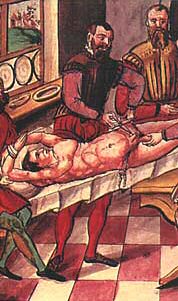
In post-conquest England, after the Norman invasion, it is notable that there appears to be no mention of the victim's or the rapist's social class - whether you were a slave or a Lord, your genitals were getting the chop!


"Sausies for din-dins!"
    

As Coleman states, it wasn't only the woman's dignity that was affected - it also affected the men in her life's pride, as they feel lessened by the fact that they were unable to protect her. This can also be seen on a larger scale, with reports from Ancient Greece up until present day - rape is a pretty common consequence of warfare. "War rape" is more than just about the physical act, and goes beyond the terrorising of the woman (or man) who is being victimised. As Susan Brownmiller says:

(R)ape by a conqueror is compelling evidence of the conquered's status of masculine impotence. Defense of women has long been a hallmark of masculine pride, as possession of women has been a hallmark of masculine success. Rape by a conquering soldier destroys all remaining illusions of power and property for men of the defeated side.

Anglo-Saxon England, being a realm which was involved in regular conflict with the Danes and later the Normans, is no exception to this, and unfortunately women were often used as a tool to demonstrate the taking of the country to the men.


Sources:
http://www.law-lib.utoronto.ca/Diana/fulltext/tomp.htm
Rape in Anglo-Saxon England
Rape and Ravishment in the Literature of Medieval England
The Semiotics of Rape in Renaissance English Literature

Tuesday, 9 July 2013

Sympathy for Eve


One of the texts I found really interesting when doing my undergrad was the Old English Genesis, especially the Genesis B section, because of its pretty unusual and unconventional depictions of God, Satan and Eve when compared to other accounts of the fall of angels and the temptation of Adam and Eve, both from the Anglo-Saxon period and other eras.

The Old English Genesis (A and B) can be found in the Junius 11 manuscript (also referred to as the Caedmon Manuscript), dating to about 930-1000AD. This manuscript also contains Daniel; Exodus; and Christ and Satan. The Old English Genesis is a translation (or transliteration when talking about Genesis B) of an Old Saxon version of the text.

 As an example of this poem's unconventionality (is this even a word?), here is an example of one of Satan's soliloquies:

‘There is no need at all for me to have a master. I can work just as many
marvels with my hands.I have plenty of power to furnish a goodlier throne,
one more exalted in heaven.Why must I wait upon his favour
and defer to him in such fealty? […]So it does not seem to me fitting
that I need flatter God at all for any advantage. No longer will I be
his subordinate.’ – Genesis B 278-291

Reading this, Satan seems to be coming across with some fair points, right? Seems like a sound enough guy! And to further top this off, the fact that God throws him and his followers into hell like an angry toddler, kind of makes us think again about who the good guy is...and why is he being such a dick?!


So that leaves us to move on to Eve, who gets off really lightly compared to other depictions of her. Rather than damning her, the poet seems to offer her a lot of sympathy, almost going out of his way to express how it wasn't her fault:

Yet she did it out of loyal intent. She did not know
that there were to follow so many hurts and 
terrible torments for humankind because she
took to heart what she heard in the counsellings
of that abhorrent messenger; but rather she thought
that she was gaining the favour of the heavenly King - Genesis B

Most importantly, this pleading for Eve's lack of blame veers toward heresy. In Genesis B, it is not out of disobedience, but of of "loyal intent" and innocent ignorance that Eve eats the fruit. This would suggest that the poet seems to be almost disagreeing with God's judgement and punishment of her and basically we've all been suffering because of God's lousy judgement of her. 

nom nom nom


Of course, it's nice that the poet is being all sympathetic towards Eve (and the Devil), but it must also be said that he is also a bit of a sexist...or more than a bit. Throughout Genesis B, Eve is described as being "lovely" and "beautiful", yet her intelligence is never commented on, while Adam is described as "self-determined" and is clear-sighted and independent enough to see through the 'messenger's' (in this version, Satan sends a messenger to tempt Adam and Eve, rather than go himself) temptations. So basically, what he's trying to say is that Eve is lovely and all, and a sight to look at, but basically, the lights are on, but nobody's home. Eve, like all of our sex, has "the frail mind of women" and does not think to question the angel/serpent, but takes the apple without too much thought. Lastly, the idea of "woman as beguiler of man" is evident here, as Adam, who can't resist Eve's "lovely" facade, gives in and takes a bite of the apple - don't you know, (warning, sarcasm alert) men can't help themselves when they are confronted with a sweet face, or a short skirt. Anyway, Adam pretty much blames it all on Eve - what a douche! This author really has us rooting for the traditional baddies!

Saturday, 6 July 2013

The real life Éowyn... kind of


As most people already know, J.R.R Tolkien was somewhat of an Anglo-Saxon, Middle Ages, and Norse Mythology enthusiast, having been involved in such works as Sir Gawain and the Green Knight (translator), Beowulf: The Monsters and the Critics (where he forgets about Grendel's Mother), and The Legend of Sigurd and Gudrún, as well as being professor of Anglo-Saxon studies in Oxford. Tolkien was also the founder of the Kolbitar club (members included C.S. Lewis), where a group would sit around and read Icelandic and Norse sagas over some pints of mead...well...maybe not the mead bit, but the rest is true.


WHERE CAN I GET THIS?!


So anyway, the influence of all these cultures and their literatures is pretty obvious to spot in The Hobbit and The Lord of the Rings trilogy. 

  • There were many 'rings of power' in Norse mythology - perhaps the one ring is based on "Andvaranaut", a magical ring forged by the dwarf Andvari. Norse god of mischief, Loki, tricked Andvari into giving him this ring, and so the dwarf, in revenge, curses the ring so that it brings destruction to whoever wore it. 
  • Many of the dwarves' names in The Hobbit are taken from Norse mythology, and can be seen in the Prose Edda, including Dvalin, Bifur, Bafur, Bombor, Dori, Nori, Ori, Oin, Fili, Kili, Gloin and Thorin!
  • There's clearly a link between Middle-Earth and Midgard, the Norse realm of humankind. 
  • There's a possibility that the inspiration for Smaug came from the dragon that appears in Beowulf 
  • Perhaps Arwen is an adaptation of Freyja, her necklace which she gives to Aragorn a version of the Brisings necklace, which Freyja wore to enhance her beauty. It is also notable that Freyja had a human lover, Óttar. 
  • And there are many more similarities...

And now that I've gone off the point somewhat, it's time to talk about what the post is actually about...Éowyn! But it's mostly about....Æthelflæd!


So, who the hell is Æthelflæd? Well, she just so happens to be a pretty kick-ass Anglo-Saxon woman. Born during the height of the Viking invasions, she was the daughter of Alfred the Great, King of the Anglo-Saxon kingdom of Wessex (the other three kingdoms being Northumbria, East Anglia and Mercia). During the 9th century, England was experiencing more frequent attacks from the Vikings, which culminated in "The Great Heathen Army" in 865. In 871,  Æthelflæd's uncle, King Æthelred died from wounds received in battle, and Alfred the Great came to power, winning a victory over the Danes. This led to a peace agreement, in  which the Vikings were given the eastern part of Mercia, to be incorporated into the Viking East Anglia. 

THIS IS ENGLAND

Unluckily for Alfred, the Vikings didn't keep their word (after all, they were plundering, raiding Vikings), and after a few years laid an attack on Wessex, and Alfred and the rest of the royal family were forced to flee to the Somerset marshes, while the lousy King of Mercia fled to Europe (what a dryballs). In Somerset, Alfred apparently took shelter in the home of a peasant woman who asked him to look after some cakes on the fire. Being too preoccupied with the kingdom and all that nonsense, he accidentally let the cakes burn. 

You let the cakes burn, you dope!

Anyway, while in Somerset, Alfred got together some followers and turned them into warriors (I'll Make a Man out of You from Mulan comes to mind), and defeating the Danes at the Battle of Edington. He eventually returned London to the Mercians, and Æthelred, ruler of the remaining Mercia recognised Alfred as his Overlord. And finally, Æthelflæd comes into the story, as she was offered by Alfred to Æthelred, to cement their alliance, much like a peace-weaver would have done in Ancient Scandinavia. Alfred defeated yet another wave of Vikings, and all across England, was recognised as king. After Alfred's death, his son Edward become king of Wessex. Meanwhile in Mercia, Æthelred falls ill, and Æthelflæd effectively became ruler. 

With her brother Edward, Æthelflæd raided Danish East Anglia and repulsed the last major Danish army sent to ravage England. Æthelflæd then won the support of the Danes, and formed an alliance with the Scots and the Welsh to stand against the Norwegian invaders. When her husband died in 911, she became the sole ruler of Mercia and builds fortifications throughout Mercia. She then went on to invade Wales in order to avenge the murder of a Mercian abbot Ecgberht, and succeeded in capturing the king's wife. Æthelflæd then led her armies against the Viking invaders, capturing their stronghold at Derby. In 918, the people of the region of York promised to pledge their loyalty to Æthelflæd in order to gain her support against Norse raiders. Unfortunately, before this could be realised, she died in the same year, leaving behind her daughter Ælfwynn as ruler of Mercia (although she is removed from power by Edward). 

Æthelflæd's and Éowyn's lives are by no means identical, I am not saying they are, but Æthelflæd was most likely an influence, especially noting that the Rohirrim in general seem to have been influenced by the Anglo-Saxons - their language is based on Old English, and the Hall "Meduseld" brings to mind images of the mead-hall, especially that of King Hrothgar's in Beowulf. In fact, comparisons can also be made between Éowyn and Wealhtheow, as both serve as cup-bearers in the Great Hall. Comparisons can also be made between the hymn sang by Eorl in Lord of the Rings and 'The Wayfarer', an Anglo-Saxon poem. And many more comparisons too. It makes sense that Éowyn should be based on Anglo-Saxon sources also (although there have also been comparisons made between her and the Valkyries of Norse Mythology), and is perhaps some sort of hybrid between the traditional cup-bearer Wealhtheow, and the more active and powerful Æthelflæd. 

Too often have I heard of duty,’she cried. ‘But am I not of the House of Eorl, a shieldmaiden and not a dry-nurse? I have waited on faltering feet long enough. Since they falter no longer, it seems, may I not now spend my life as I will? 
'What do you fear, lady?” he asked. 

'A cage,” she said. “To stay behind bars, until use and old age accept them, and all chance of doing great deeds is gone beyond recall or desire.'”

Éowyn's deeds also remind me of my reading of Lagertha. Also a shieldmaiden, she disguises herself as a man (much like the women in Lagertha's story do when their relam is attacked by the King of Sweden) and proves herself the be as capable as any man on the battlefield. Hell, she even kills the witch king!